Television Shows A Comprehensive Overview

Shows tv family 2000s sitcoms top television time popular most classic game fan

Television shows have profoundly shaped our culture, evolving from humble beginnings to the diverse and globally influential medium we know today. This exploration delves into the history, genres, production, audience engagement, cultural impact, and future trajectory of this pervasive form of entertainment, examining its intricate relationship with film and its adaptation to ever-changing technological landscapes.

From the earliest black-and-white broadcasts to the sophisticated streaming services of the present, television’s narrative power has consistently captivated audiences. We will analyze the key elements that contribute to a show’s success, exploring everything from compelling storytelling and character development to the strategic marketing techniques employed by networks and streaming platforms to attract and retain viewers.

History of Television Shows

Television, a ubiquitous presence in modern life, boasts a rich and complex history, evolving from a niche technological marvel to a dominant force in global culture and communication. Its journey reflects not only advancements in technology but also societal shifts, cultural trends, and the ever-changing tastes of audiences.Television’s development wasn’t a linear progression but rather a series of breakthroughs and innovations.

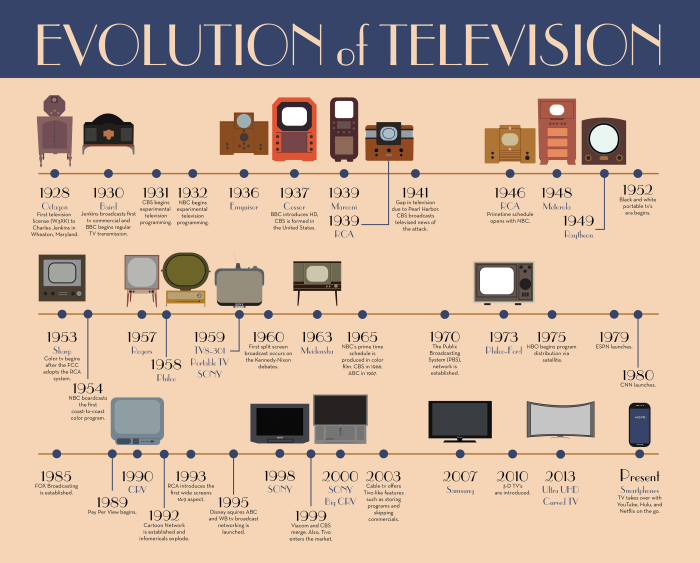
Early experimental broadcasts, largely mechanical in nature, paved the way for the electronic television systems that would eventually become the norm. The gradual improvement in picture quality, the transition from black and white to color, and the introduction of remote controls are just a few examples of the technological advancements that shaped the medium.

A Timeline of Significant Developments

The evolution of television can be charted through several key milestones. The 1920s saw the first experimental broadcasts, laying the groundwork for future developments. The 1930s witnessed the emergence of regular, albeit limited, television programming. The post-World War II era saw a boom in television ownership and production, with the 1950s marking a significant expansion in broadcasting networks and the variety of programming offered.

The introduction of color television in the 1960s revolutionized the viewing experience, while the late 20th and early 21st centuries saw the rise of cable television, satellite television, and ultimately, streaming services, fundamentally altering the way television content is produced, distributed, and consumed. The development of high-definition television (HDTV) further enhanced the viewing experience.

Evolution of Television Genres

The genres of television shows have undergone a dramatic transformation throughout history. Early television programming largely consisted of live broadcasts of variety shows, newsreels, and simple sitcoms. The 1950s and 60s saw the rise of the anthology series, which presented different stories each week, often with a dramatic or literary bent. The 1970s brought about the rise of the “quality drama,” exemplified by shows like

  • The Mary Tyler Moore Show* and
  • All in the Family*, which tackled complex social and political issues. The 1980s and 90s saw the proliferation of sitcoms, dramas, and reality television, with cable television expanding the range of genres and content available. The 21st century has witnessed the rise of streaming services and on-demand viewing, leading to a resurgence of prestige television and the diversification of genres, including the increasing popularity of docuseries and limited series.

Groundbreaking Television Shows and Their Impact

Several television shows have profoundly impacted society and culture.

  • I Love Lucy* (1951-1957), a groundbreaking sitcom, demonstrated the power of television to reach mass audiences and introduced innovative filming techniques.
  • Sesame Street* (1969-present) revolutionized children’s programming by incorporating educational elements into entertaining content.
  • All in the Family* (1971-1979) tackled controversial social issues such as racism and sexism, sparking national conversations and challenging societal norms.
  • The Simpsons* (1989-present), a long-running animated sitcom, has become a cultural icon, influencing language, humor, and popular culture. More recently, shows like
  • Breaking Bad* (2008-2013) and
  • Game of Thrones* (2011-2019) have redefined the landscape of prestige television, showcasing sophisticated storytelling and high production values. These are just a few examples of shows that have not only entertained but also shaped societal discourse and cultural trends.

Genres of Television Shows

Television shows span a vast landscape of genres, each with its own unique characteristics, storytelling conventions, and target audience. Understanding these genres helps viewers navigate the diverse offerings and producers tailor their content to specific demographics and preferences. Genre classification isn’t always rigid; many shows blend elements from multiple genres, creating hybrid forms that appeal to broader audiences.

Categorization of Television Show Genres

The following table provides a categorized list of common television show genres, along with brief descriptions, examples, and target audiences. The examples provided are illustrative and not exhaustive.

Genre Description Examples Target Audience
Drama Focuses on serious, realistic situations and complex characters, often exploring emotional depth and interpersonal relationships. The Crown, Breaking Bad, Succession Adults interested in character-driven narratives and emotionally resonant stories.
Comedy Aims to evoke laughter through humor, wit, and often satirical observations of everyday life. Subgenres include sitcoms, romantic comedies, and dark comedies. The Office, Parks and Recreation, Fleabag Broad audience, appealing to those seeking entertainment and lighthearted viewing.
Science Fiction (Sci-Fi) Explores hypothetical scientific advancements, futuristic settings, and often deals with themes of technology, space exploration, and societal change. Star Trek, Black Mirror, Westworld Fans of speculative fiction, technology enthusiasts, and those interested in exploring “what if” scenarios.
Fantasy Features magical elements, mythical creatures, and often draws inspiration from folklore and mythology. Game of Thrones, The Witcher, Lord of the Rings: The Rings of Power Fans of mythology, folklore, and escapist narratives.
Horror Seeks to frighten and thrill the audience through suspense, fear, and the depiction of the macabre. The Walking Dead, Stranger Things, American Horror Story Viewers who enjoy suspense, thrillers, and being scared.
Mystery Centers on unraveling a crime or solving an enigma, often involving clues, suspects, and investigations. Sherlock, True Detective, Knives Out (film, but exemplifies the genre) Fans of puzzles, detective work, and suspenseful narratives.
Thriller Builds suspense and tension, often involving dangerous situations, high stakes, and unexpected twists. The Fugitive, Homeland, You Viewers who enjoy suspense, action, and unpredictable plots.
Reality Television Presents unscripted situations and real-life individuals, often focusing on competition, relationships, or personal challenges. Survivor, The Real Housewives, Keeping Up with the Kardashians Broad audience, appealing to those interested in observing real-life dynamics and competition.
Crime Drama Focuses on criminal investigations, police procedures, and the legal system, often featuring morally ambiguous characters. Law & Order, Criminal Minds, The Wire Fans of crime procedurals, legal dramas, and character-driven stories within a crime context.
Documentary Presents factual information and real-life events, often exploring historical topics, social issues, or scientific discoveries. Planet Earth, Making a Murderer, The Civil War Viewers interested in learning, gaining factual knowledge, and exploring real-world issues.

Genre Characteristics and Conventions

Each genre employs distinct storytelling techniques and conventions to engage its target audience. For instance, dramas rely on character development and complex plots, while comedies utilize humor and witty dialogue. Sci-fi often explores futuristic technology and societal implications, whereas fantasy delves into magical realms and mythical creatures. The use of specific camera angles, editing styles, music, and sound design further enhances the unique atmosphere and emotional impact of each genre.

Genre Comparison and Contrast

Comparing genres reveals contrasting approaches to storytelling and audience appeal. While dramas prioritize emotional depth and realistic portrayals, comedies emphasize humor and lightheartedness. The pacing and narrative structure also vary significantly; thrillers often feature rapid-fire action and suspenseful cliffhangers, whereas documentaries adopt a more methodical and informative approach. Ultimately, the choice of genre depends on the intended message, the target audience, and the overall creative vision of the producers.

Production Aspects of Television Shows

The creation of a television show is a complex undertaking, involving numerous stages and a large team of skilled professionals. From initial concept to final broadcast, the process demands meticulous planning, creative vision, and efficient execution. Understanding the various production aspects is crucial to appreciating the artistry and logistics involved in bringing a television show to life.

The Television Show Production Process

The typical production process of a television show can be visualized through a flowchart. Imagine a flowchart beginning with “Idea Generation/Development,” branching into “Scriptwriting,” “Pre-production,” “Production,” and “Post-production.” Each of these major stages would further branch into more specific tasks. For example, “Pre-production” might branch into “Casting,” “Location Scouting,” “Set Design,” and “Budgeting.” “Production” could include “Filming,” “Sound Recording,” and “On-Set Direction.” Finally, “Post-production” might involve “Editing,” “Visual Effects,” “Sound Mixing,” and “Color Grading.” The flowchart would then culminate in “Distribution/Broadcast.” This visual representation clarifies the sequential and interconnected nature of each stage.

Key Personnel and Their Roles

Several key personnel contribute to the success of a television show. Writers develop the narrative, crafting compelling storylines and characters. Directors oversee the creative aspects of production, guiding the actors and crew to realize the script’s vision. Actors bring the characters to life through their performances. Producers manage the logistical and financial aspects of production, ensuring the project stays on schedule and within budget.

Cinematographers are responsible for the visual look of the show, working with lighting and camera techniques to create a specific aesthetic. Editors assemble the footage, shaping the narrative flow and pacing. Sound designers and mixers create the audio landscape, enhancing the emotional impact and realism of the show.

Pre-Production

Pre-production lays the groundwork for a successful production. This phase involves developing the script, securing funding, casting actors, designing sets and costumes, and planning the shooting schedule. Thorough pre-production minimizes problems during filming and ensures the project stays on track. For instance, a meticulously planned shooting schedule can help avoid costly delays and ensure efficient use of resources.

A well-defined budget ensures financial stability throughout the production process.

Production

The production phase is where the actual filming takes place. This stage involves coordinating the actors, crew, and equipment to capture the scenes as planned. Efficient communication and organization are essential to maintain momentum and avoid disruptions. Consider a complex scene involving numerous actors, special effects, and intricate camera movements; careful planning and execution are crucial for a successful outcome.

Post-Production

Post-production encompasses the editing, sound mixing, visual effects, and color grading of the footage. This stage transforms the raw footage into a polished final product. Editing involves selecting and arranging the best takes, ensuring a cohesive narrative. Sound mixing balances dialogue, music, and sound effects to create an immersive audio experience. Visual effects can enhance the realism or create fantastical elements.

Color grading refines the visual look, establishing a consistent aesthetic. The post-production process is critical in shaping the overall quality and impact of the television show.

Television Shows and Audience Engagement

Tv shows types different

The success of a television show hinges on its ability to captivate and retain a loyal audience. This engagement is a complex interplay of factors, ranging from compelling storytelling and strong characters to effective marketing and the utilization of modern media platforms. Understanding these elements is crucial for networks aiming to create and maintain popular programming.Factors contributing to a television show’s popularity and success are multifaceted.

High-quality writing, compelling narratives, and well-developed characters are fundamental. A show’s originality and unique selling proposition also play a significant role in attracting viewers. Strong acting performances and skillful direction further enhance the viewing experience. Effective marketing campaigns, including trailers and social media engagement, contribute to generating pre-release buzz and maintaining audience interest throughout a show’s run.

Finally, the timing of a show’s release and its placement within a network’s schedule can significantly influence its viewership. For example, a critically acclaimed drama airing directly after a popular sitcom might benefit from a built-in audience.

The Impact of Social Media and Online Platforms

Social media and online platforms have revolutionized the way audiences interact with television shows. These platforms provide avenues for viewers to share their opinions, engage in discussions, and connect with other fans. The use of hashtags, live-tweeting during broadcasts, and online fan communities foster a sense of shared experience and deepen audience engagement. Furthermore, streaming services offer viewers greater control over their viewing habits, allowing them to watch shows on their own schedules and access a wider range of content.

This accessibility has broadened the reach of many television shows, extending their viewership beyond traditional broadcast audiences. For example, the popularity of shows like “Stranger Things” on Netflix is largely attributed to its global reach through the streaming platform and the subsequent social media conversations it generated.

Strategies Used by Television Networks to Attract and Retain Viewers

Television networks employ various strategies to attract and retain viewers. These strategies often involve creating high-quality programming that resonates with specific target audiences. Networks also invest heavily in marketing and promotion, utilizing both traditional and digital media channels to reach potential viewers. Cross-promotion, where shows within the same network are advertised to each other’s audiences, is a common tactic.

Furthermore, networks often use data analytics to understand viewer preferences and tailor their programming accordingly. The use of interactive elements, such as polls and social media contests, further engages audiences and encourages repeat viewership. For instance, reality shows often utilize live voting and social media interaction to maintain audience participation and influence the outcome of the show.

Another example is the use of cliffhangers at the end of episodes to keep viewers hooked and anticipating the next installment.

The Impact of Television Shows on Culture

Shows tv family 2000s sitcoms top television time popular most classic game fan

Television, since its inception, has profoundly impacted societal values, beliefs, and behaviors. Its pervasive reach has made it a powerful tool for reflecting and shaping cultural norms, acting as both a mirror to society and a catalyst for change. The influence extends far beyond simple entertainment, impacting fashion trends, linguistic patterns, and even social activism.Television shows have consistently reflected prevailing societal values and beliefs, often amplifying existing trends or subtly introducing new ones.

For example, the portrayal of family dynamics in shows like “Leave It to Beaver” in the 1950s presented a highly idealized, often unrealistic, image of suburban family life, influencing perceptions of the ideal family structure during that era. Conversely, shows like “The Cosby Show” in the 1980s offered a more diverse and nuanced portrayal of an upper-middle-class African American family, challenging existing racial stereotypes and promoting a more inclusive vision of family life.

Television’s Influence on Fashion, Language, and Behavior

The influence of television on fashion is undeniable. Iconic shows like “Sex and the City” significantly impacted women’s fashion choices, popularizing specific styles and accessories. Similarly, the characters’ wardrobes in shows like “Gossip Girl” and “Euphoria” have directly influenced current trends, demonstrating the power of visual media to shape consumer behavior. Television also plays a significant role in shaping language, with catchphrases and slang from popular shows entering everyday conversations.

The impact on behavior is more subtle but equally significant. Shows can normalize certain behaviors, both positive and negative, influencing viewers’ attitudes and actions. For instance, the portrayal of substance abuse or violence in certain shows can have unintended consequences, potentially desensitizing viewers or even prompting imitation.

Television as a Platform for Social Commentary and Activism

Many television shows serve as powerful platforms for social commentary and activism, raising awareness about important social issues and inspiring viewers to engage in social change. Shows like “The Wire,” which realistically depicted the drug trade and its impact on Baltimore, sparked important conversations about crime, poverty, and urban decay. Similarly, “Orange is the New Black” offered a nuanced portrayal of the lives of incarcerated women, raising awareness about issues of mass incarceration and criminal justice reform.

The use of television as a tool for activism is continually evolving, with shows increasingly tackling complex and controversial topics, fostering dialogue, and potentially inspiring viewers to become involved in social and political movements. The power of visual storytelling to communicate complex social issues and inspire action cannot be underestimated.

Movies and Television

Movies and television, while both visual storytelling mediums, employ distinct approaches to narrative structure, production, and audience engagement. This comparison highlights the key differences and unique strengths of each format, illustrating how their contrasting characteristics shape the final product experienced by viewers.

The fundamental differences between movies and television shows stem from their inherent formats and target audiences. Movies typically tell a self-contained story within a limited timeframe, while television series often unfold over multiple episodes and seasons, allowing for more complex character arcs and intricate plotlines. This core distinction impacts nearly every aspect of their creation and reception.

Storytelling Techniques

The narrative structures of movies and television differ significantly. Movies generally follow a three-act structure with a clear beginning, middle, and end, often focusing on a single, central conflict. Television series, particularly those with longer seasons, often employ serialized storytelling, where plotlines continue across multiple episodes, and overarching narratives unfold gradually. Some series also incorporate episodic elements, with self-contained stories within the larger arc.

This allows for a greater exploration of themes and character development.

  • Movies prioritize a concise, impactful narrative, often culminating in a decisive resolution.
  • Television series can explore more nuanced themes and character development over extended periods.
  • Movies often utilize a faster pace to maintain audience engagement within a shorter timeframe.
  • Television series can afford a slower pace, allowing for more detailed exploration of characters and relationships.

Production Aspects

The production of movies and television shows involves vastly different budgets, timelines, and distribution methods. Movie productions typically have significantly larger budgets, concentrated within a shorter timeframe, often requiring extensive pre-production planning. Television shows, particularly those with longer runs, often have smaller per-episode budgets spread across a longer production schedule, necessitating more efficient resource management.

  • Movie productions typically involve larger budgets and shorter production timelines.
  • Television series often operate with smaller per-episode budgets and longer production schedules.
  • Movies are typically distributed through theatrical releases, followed by home video and streaming.
  • Television shows are distributed through broadcast networks, cable channels, and streaming platforms, often on a weekly or bi-weekly basis.

Narrative Development and Character Portrayal

The unique strengths and limitations of each medium directly influence the depth and complexity of narrative development and character portrayal. Movies excel at creating immersive, self-contained narratives with powerful emotional impact, while television series offer the opportunity for intricate character development and exploration of complex themes over time. However, movies can struggle to fully develop supporting characters, whereas television can sometimes suffer from plot inconsistencies or pacing issues across multiple seasons.

  • Movies are effective at creating impactful, self-contained narratives with high emotional resonance.
  • Television series provide more opportunities for extensive character development and exploration of complex themes.
  • Movies may sacrifice character depth for narrative efficiency.
  • Television series can sometimes suffer from pacing issues or plot inconsistencies across multiple seasons.

The Future of Television Shows

The television landscape is undergoing a rapid and dramatic transformation, driven by technological advancements and shifting audience preferences. The traditional broadcast model is increasingly challenged by the rise of streaming services and the growing demand for personalized and interactive content. This evolution presents both opportunities and challenges for the industry, requiring innovative approaches to production, distribution, and audience engagement.The convergence of several key trends is shaping the future of television.

Streaming platforms continue to proliferate, offering viewers unprecedented choice and flexibility in accessing content. Simultaneously, advancements in artificial intelligence (AI) and virtual reality (VR) are opening up new possibilities for interactive storytelling and immersive viewing experiences. These technological advancements are fundamentally altering how television shows are created, consumed, and experienced.

Emerging Technologies and Their Impact

The proliferation of streaming services like Netflix, Disney+, HBO Max, and others has fundamentally altered the television landscape. These platforms offer vast libraries of on-demand content, bypassing the limitations of traditional broadcast schedules. This shift has empowered viewers with greater control over their viewing habits, leading to increased competition and innovation among content creators. Furthermore, the rise of AI is impacting various aspects of television production, from scriptwriting and editing to personalized recommendations and targeted advertising.

AI-powered tools can analyze viewing data to predict audience preferences and optimize content creation, leading to more efficient and effective production processes. Interactive television, utilizing technologies like second-screen applications and voice control, is also gaining traction, allowing viewers to actively participate in the narrative and customize their viewing experience. For example, viewers might be able to influence plot points or character development through their choices during the show.

Evolution of Television Show Formats and Storytelling

The future of television storytelling is likely to be characterized by greater experimentation and diversification in formats and narrative structures. We can anticipate a rise in shorter-form content, such as episodic series tailored for mobile viewing, and a continued emphasis on personalized narratives that cater to niche audiences. Interactive storytelling, where viewers actively shape the narrative, will likely become more prevalent.

This could involve branching storylines, customizable character arcs, or even user-generated content integrated into the main narrative. Furthermore, the lines between different media formats will continue to blur, with television shows increasingly incorporating elements of gaming, augmented reality, and social media. For instance, a show might feature a companion app that provides additional information, puzzles, or interactive challenges.

A Speculative Scenario: The Television of 2040

Imagine a future where television consumption is seamlessly integrated into our daily lives. Personalized AI assistants curate our viewing experiences, suggesting shows based on our preferences and moods. Immersive VR headsets transport us directly into the worlds of our favorite shows, allowing us to interact with characters and environments in unprecedented ways. Television production is largely automated, with AI assisting in scriptwriting, directing, and even acting.

Content is created dynamically, adapting to individual viewer choices and creating unique viewing experiences for each person. Global collaboration is the norm, with international crews and diverse creative talent contributing to a vast and varied range of shows. The traditional concept of a “television show” might evolve into personalized, interactive narratives tailored to the individual viewer, blurring the lines between passive consumption and active participation.

This might involve a central narrative engine generating personalized story branches, tailored to individual viewer choices, and utilizing AI to deliver customized experiences that maintain narrative integrity across numerous viewing paths. The technology to achieve this is not currently fully developed, but the underlying principles of personalized content and AI-driven narrative generation are already emerging.

The journey through the world of television shows reveals a dynamic and ever-evolving industry. From its historical roots to its anticipated future, the medium continuously adapts to technological advancements and societal shifts, reflecting and influencing our culture in profound ways. Understanding the complexities of production, the nuances of various genres, and the evolving relationship between television and its audience provides a richer appreciation for this powerful form of entertainment and its enduring impact on our lives.

Popular Questions

What is the difference between a sitcom and a drama?

Sitcoms generally use humor and recurring characters in shorter, episodic narratives, while dramas focus on more serious themes and character development across longer story arcs.

How are television shows funded?

Funding sources vary, including network or streaming platform investments, advertising revenue, and subscription fees.

What is the role of a showrunner?

The showrunner is the head writer and executive producer, overseeing the creative vision and day-to-day production of a television series.

What are some emerging trends in television?

Emerging trends include increased use of interactive elements, personalized content recommendations, and the rise of shorter-form series.
How TV Shows Are Made A Comprehensive Guide

Made shows television get updated december tv

The seemingly effortless magic of television unfolds through a complex and fascinating process. From the initial spark of an idea to the final broadcast, countless individuals contribute their expertise to bring captivating stories to our screens. This exploration delves into the intricate journey of television production, revealing the stages involved in crafting the shows we watch and love.

We’ll examine the creative genesis of a show, from initial concept development and character building to scriptwriting and meticulous storyboarding. Then, we’ll journey through the pre-production hustle and bustle, including casting, location scouting, and set design. The intricacies of filming, encompassing shot selection, camera angles, and lighting, will be analyzed. Finally, we’ll uncover the post-production magic of editing, sound design, and visual effects, concluding with the strategic distribution and broadcasting strategies that bring the finished product to viewers worldwide.

A comparison with movie production will further illuminate the unique challenges and triumphs of the television landscape.

Scriptwriting and Storyboarding

The creation of a compelling television show hinges on two crucial pre-production phases: scriptwriting and storyboarding. These processes, while distinct, are deeply intertwined, working together to translate a show’s initial concept into a concrete visual narrative ready for filming. A well-crafted script provides the foundation, while storyboarding provides a visual roadmap for the director and crew.

The Scriptwriting Process: From Artikel to Final Draft

The journey from initial idea to finalized script involves several iterative stages. First, a detailed Artikel is created, breaking down the episode or season into acts, scenes, and key plot points. This provides a structural framework, ensuring a logical flow of events and character development. The Artikel may include character arcs, thematic elements, and potential turning points. Following the Artikel, the screenwriter begins drafting the script, fleshing out dialogue, action descriptions, and character interactions.

This initial draft often undergoes multiple revisions, incorporating feedback from producers, showrunners, and other creative personnel. The script may be revised to address pacing, character consistency, and narrative clarity. Finally, after several rounds of revision, the script is finalized and approved, ready for production. The entire process emphasizes collaboration and iterative refinement, ensuring the final product is both compelling and cohesive.

Storyboarding: Visualizing the Narrative

Storyboarding serves as a visual blueprint for each scene, translating the script’s written descriptions into a series of panels. Each panel depicts a single shot, outlining camera angles, character positioning, and key action elements. Storyboarding helps visualize the pacing and rhythm of a scene, ensuring smooth transitions and effective storytelling. It allows the director to plan shots meticulously, considering factors such as lighting, set design, and overall visual aesthetics.

Furthermore, storyboarding facilitates communication among the production team, providing a clear understanding of the director’s vision and simplifying the complex process of filmmaking. This visual representation minimizes ambiguity and facilitates a more efficient and streamlined production. A well-executed storyboard minimizes potential problems on set and allows for better allocation of resources.

Scriptwriting Styles Across Genres

Different television genres employ distinct scriptwriting styles. For example, a sitcom script emphasizes snappy dialogue, comedic timing, and clear character archetypes. The script often includes detailed stage directions to guide the actors’ physical comedy and interactions. In contrast, a drama series script prioritizes character development, complex relationships, and nuanced dialogue. The emphasis is on emotional depth and subtle storytelling techniques.

Action-adventure shows necessitate scripts with dynamic action sequences, detailed descriptions of stunts and special effects, and a fast-paced narrative structure. Each genre demands a unique approach to scriptwriting, tailored to its specific conventions and audience expectations. The style reflects the overall tone and pacing, influencing the visual language employed in the final product.

Pre-Production

Pre-production is the crucial planning phase before a single camera rolls. It’s where the vision for the show takes concrete form, transforming abstract ideas into a detailed blueprint for filming. This stage involves meticulous organization, collaboration, and a significant amount of problem-solving to ensure the smooth execution of production. Thorough pre-production minimizes costly on-set issues and maximizes efficiency.Pre-production encompasses several key areas, each demanding careful consideration and coordination.

These include securing the necessary funding, assembling the creative team, finalizing the script, and planning the logistics of filming. Effective pre-production ensures a cohesive and well-executed production.

Casting

Casting involves selecting actors to portray the characters in the script. This process often begins with auditions, where actors perform scenes from the script to showcase their talent and suitability for the roles. Casting directors work closely with the director and producers to identify actors who not only possess the necessary acting skills but also align with the overall vision for the show.

Factors such as physical appearance, vocal quality, and chemistry between actors are all considered. A successful cast can significantly impact the show’s success. For example, the casting of a relatively unknown actor like Bryan Cranston as Walter White in “Breaking Bad” proved to be a masterstroke, catapulting the show to critical acclaim.

Location Scouting

Location scouting is the process of identifying and securing suitable filming locations. The scout team, often led by a location manager, searches for places that match the script’s descriptions and overall aesthetic. They consider factors such as accessibility, permits, costs, and the availability of resources. The selected locations must also meet the technical requirements of filming, including adequate lighting, sound quality, and space for the crew.

For instance, a period drama might require a location that authentically reflects a specific historical era, while a science fiction show might necessitate a location that creates a futuristic atmosphere.

Set Design

Set design encompasses the creation of the physical environments where the show will be filmed. This includes constructing sets from scratch, modifying existing locations, or utilizing a combination of both. The set designer works closely with the director and production designer to translate the script’s vision into a tangible environment. The design considers factors such as the overall tone, style, and functionality of the sets, ensuring they are both aesthetically pleasing and practical for filming.

A well-designed set can significantly contribute to the show’s visual appeal and narrative effectiveness. The elaborate sets in shows like “Game of Thrones” are a prime example of the impact effective set design can have.

Budget Allocation

Budget allocation involves carefully distributing the available funds across different aspects of the production. This includes allocating resources to casting, location scouting, set design, costumes, props, equipment rentals, crew salaries, and post-production. A detailed budget is essential for managing expenses and ensuring that the production stays within its financial constraints. Effective budget management requires careful planning and monitoring throughout the pre-production and production phases.

Budget overruns can significantly impact a show’s profitability and even lead to its cancellation. For example, many successful shows have strict budgets that require creative solutions to achieve desired effects.

Sample Production Schedule (Single Episode)

The following is a sample production schedule, remember that these are estimates and vary greatly depending on the show’s complexity and budget:

Week Activity
1 Script breakdown, casting calls, location scouting begins
2 Casting finalized, location secured, set design begins
3 Set construction, costume and prop acquisition
4 Rehearsals, final set dressing, equipment check
5 Filming
6 Post-production (editing, sound mixing, VFX)

Pre-Production Departments and Roles

Effective pre-production relies on the coordinated efforts of several key departments. Each department plays a critical role in bringing the show to life before filming even begins.

  • Production Design Department: Responsible for the overall visual look of the show, including set design, costumes, and props.
  • Casting Department: Finds and selects actors for the various roles.
  • Location Department: Scouting, securing, and managing filming locations.
  • Production Management Department: Oversees the budget, scheduling, and overall logistics of pre-production.
  • Art Department: Creates and manages all the visual elements of the show, including set design, props, and costumes.

Filming and Production

Bringing a TV show script to life involves a complex and collaborative filming process. This stage translates the meticulously planned pre-production elements into a visual narrative, requiring careful coordination between the director, cinematographer, actors, and crew. The success of this phase hinges on efficient scheduling, effective communication, and a shared understanding of the show’s overall aesthetic.Filming a TV show episode is a multi-faceted process that begins with shot selection.

The director, working closely with the cinematographer, chooses the specific shots needed to tell the story effectively. This involves considering camera angles, composition, and movement to convey emotion, establish setting, and maintain visual interest. The script’s action lines and dialogue guide the selection of shots, but the director’s artistic vision plays a crucial role in shaping the visual language of the show.

Lighting is another critical element, used to create mood, highlight key actions, and guide the viewer’s eye. Different lighting techniques, from high-key (bright and even) to low-key (dark and shadowy), are employed depending on the genre and desired effect.

Shot Selection, Camera Angles, and Lighting Techniques

Shot selection involves choosing from a range of shots, including wide shots (establishing the setting), medium shots (showing characters and their interactions), and close-ups (emphasizing emotion and detail). Camera angles also contribute significantly to the narrative. A high-angle shot might portray a character as vulnerable, while a low-angle shot can make them appear powerful. Lighting techniques, such as backlighting, side lighting, and front lighting, shape the mood and atmosphere, enhancing the emotional impact of the scene.

For instance, a dimly lit scene might create suspense, while a brightly lit scene could convey happiness or optimism. The interplay of these elements is crucial in shaping the viewer’s experience.

Filming Styles Across Genres

Different TV genres employ distinct filming styles. Sitcoms often utilize a multi-camera setup with a live studio audience, creating a more immediate and energetic feel. The quick cuts and close-ups emphasize comedic timing and reactions. In contrast, dramas frequently utilize a single-camera setup, allowing for greater control over lighting, camera angles, and shot composition. This approach often results in a more cinematic and visually sophisticated aesthetic.

Documentaries, on the other hand, typically employ a cinéma vérité style, using handheld cameras and natural lighting to create a sense of immediacy and realism. The editing style often reflects the documentary’s narrative structure, weaving together interviews, B-roll footage, and archival materials.

Comparison of Camera Setups

Camera Setup Description Advantages Disadvantages
Single-Camera One camera is used to film each shot, allowing for greater control over composition and lighting. Often used for dramas and some reality shows. High creative control, cinematic look, flexibility in shot selection. More time-consuming, higher production costs.
Multi-Camera Multiple cameras are used simultaneously, often in a studio setting with a live audience. Commonly used for sitcoms and game shows. Faster production, lower costs per episode, immediate audience reaction. Less creative control, limited camera angles.
Handheld The camera is held by the operator, creating a more dynamic and immersive feel. Frequently used in documentaries and action sequences. Creates a sense of immediacy and realism, good for fast-paced action. Can be shaky and less stable, requires skilled camerawork.
Steadicam A camera stabilization system that allows for smooth, flowing shots, even while moving. Used in a wide range of genres to achieve fluid camera movements. Smooth and stable shots, creates a professional and polished look. Requires specialized equipment and skilled operators, relatively expensive.

Post-Production

Post-production is where the magic truly happens. After the cameras stop rolling and the actors go home, the raw footage undergoes a transformative journey, shaping it into a cohesive and engaging narrative. This stage involves a complex interplay of editing, sound design, visual effects, and color grading, all working together to create the final product.The post-production process is arguably as crucial as pre-production and filming.

It’s where the director’s vision is truly realized, and where the raw materials are refined into a polished, compelling piece of television. The various stages are intricately linked, with decisions made in one area influencing choices in others.

Editing

Editing is the backbone of post-production. It involves selecting, arranging, and assembling the best takes of footage to create a continuous and coherent narrative. Editors use various techniques, such as cutting, transitions, and pacing, to control the flow of the story and manipulate the viewer’s emotional response. For example, a quick cut sequence might convey a sense of urgency or chaos, while slower, more deliberate cuts can build suspense or intimacy.

The editor’s skill lies in seamlessly weaving together disparate shots to create a compelling and engaging visual experience. They also work closely with the director to ensure the final product aligns with the creative vision.

Sound Mixing

Sound mixing is the process of combining and balancing all the audio elements of a show, including dialogue, music, sound effects, and ambient noise. A skilled sound mixer ensures that the dialogue is clear and understandable, while the music and sound effects enhance the emotional impact and atmosphere of each scene. For instance, a tense scene might feature low, rumbling sounds and dissonant music to heighten the sense of dread, whereas a romantic scene might utilize softer music and gentle ambient sounds to create a more intimate mood.

The goal is to create a cohesive and immersive soundscape that complements the visuals and enhances the storytelling.

Visual Effects

Visual effects (VFX) range from subtle enhancements to completely fantastical creations. They can involve anything from removing unwanted objects from a scene to creating entire digital environments. In television, VFX might be used to create realistic-looking explosions, enhance special effects, or add digital elements to a scene. The use of VFX is often driven by budget and the overall aesthetic of the show.

A sci-fi show, for instance, might make extensive use of VFX to create otherworldly landscapes and futuristic technology, whereas a period drama might use more subtle VFX to enhance the visual quality of the set and costumes.

Color Grading

Color grading is the process of adjusting the color and tone of the footage to create a specific look and feel. It involves manipulating the color saturation, contrast, and brightness to achieve the desired aesthetic. Different color palettes can evoke different emotions and moods. A dark and desaturated look might create a sense of mystery or gloom, while vibrant and saturated colors might convey energy and excitement.

Color grading is often used to create a consistent visual style throughout the entire show. A skilled colorist can significantly impact the overall tone and atmosphere of the production.

Distribution and Broadcasting

Getting a TV show from the post-production stage to the eyes of viewers is a complex process involving multiple players and strategies. Distribution and broadcasting encompass a wide range of activities, from negotiating deals with networks and streaming services to crafting compelling marketing campaigns that resonate with the target audience. The methods and challenges involved vary significantly depending on the chosen distribution channels.The process of distributing a TV show involves securing agreements with various platforms.

Traditional television networks, like ABC, CBS, and NBC, typically acquire the rights to air a show through licensing agreements. These agreements specify the number of episodes, the broadcast schedule, and the associated fees. Streaming services, such as Netflix, Hulu, and Amazon Prime Video, operate differently; they might commission shows directly or acquire the rights to already-produced content. These platforms often utilize their own proprietary distribution infrastructure, bypassing traditional broadcasting methods.

Furthermore, international distribution requires separate agreements with broadcasters or streaming services in each target region, adding another layer of complexity.

Distribution Channels and Agreements

Securing distribution deals involves navigating the intricacies of licensing agreements, rights clearances, and revenue sharing models. Negotiations with networks and streaming services often hinge on factors such as the show’s potential audience, the production budget, and the overall market demand. The agreements Artikel the terms of distribution, including exclusivity periods (meaning the show can only air on one platform for a specific time), the number of times the show can be broadcast, and how the revenue generated from advertising or subscriptions is split between the production company and the distribution platform.

For example, a popular show might command a higher licensing fee and a more favorable revenue-sharing agreement compared to a less-established program.

Marketing and Promotion Strategies

Effective marketing and promotion are crucial for a show’s success. Strategies typically involve a multi-pronged approach, leveraging various media channels to reach the target audience. Traditional methods, such as television commercials and print advertisements, are still used, but digital marketing plays an increasingly important role. This includes targeted social media campaigns, online video advertising, and influencer marketing. The use of trailers, clips, and behind-the-scenes content on platforms like YouTube and social media can generate significant buzz and anticipation before a show’s premiere.

Furthermore, engaging with viewers through social media and responding to feedback can build a loyal fanbase. For instance, a successful campaign might involve creating interactive online experiences related to the show’s plot or characters.

Challenges Faced by Traditional Broadcasters and Streaming Platforms

Traditional broadcasters face the challenges of declining viewership due to cord-cutting (the cancellation of cable TV subscriptions) and increasing competition from streaming services. Maintaining a consistent schedule and managing advertising revenue are also key concerns. Streaming platforms, on the other hand, grapple with the high cost of content acquisition and production, fierce competition for subscribers, and the need to constantly develop original programming to attract and retain viewers.

Furthermore, streaming platforms need to manage data security, user experience, and issues of content piracy. The Netflix original series

Stranger Things*, for example, showcases the success of a streaming platform’s original content, while the decline in viewership of many network television shows illustrates the challenges faced by traditional broadcasters.

Movies and Television

Tv show make

Movies and television shows, while both visual storytelling mediums, differ significantly in their production processes, creative approaches, and overall storytelling techniques. Understanding these differences illuminates the unique characteristics and appeal of each format. The evolving landscape, however, is blurring these lines, creating hybrid forms that challenge traditional classifications.Movies and television productions operate under fundamentally different constraints. The most obvious is budget.

Feature films typically command far larger budgets, allowing for extensive location shooting, elaborate sets, and high-end special effects. Television series, particularly those with longer runs, often operate under tighter financial restrictions, requiring creative solutions to achieve visual impact within budgetary limitations. This directly impacts scheduling; movies are typically shot over a concentrated period, while television series unfold over months or even years, requiring efficient scheduling to accommodate actors’ availability and production logistics.

Production Process Differences

Movie production is generally a more linear process. Pre-production, principal photography, and post-production are distinct phases, each with a defined timeline. Television production, especially for series, is more iterative. Episodes are often filmed concurrently, requiring flexible scheduling and a more agile production approach. This difference stems from the episodic nature of television, demanding a continuous output of content.

Furthermore, television often incorporates more improvisation and flexibility during filming to accommodate the ongoing narrative arc and character development across multiple episodes. Movie production, in contrast, tends to be more rigidly planned and executed.

Storytelling Techniques

While both mediums utilize narrative structure, pacing, and character development, their storytelling techniques differ due to their inherent formats. Movies typically focus on a self-contained narrative, culminating in a resolution within a specific timeframe. Television series, on the other hand, employ serialized storytelling, building upon previous episodes and developing characters and plotlines across multiple seasons. This allows for more nuanced character exploration and complex plot arcs, something less easily achieved within the confines of a single movie.

Movies often prioritize a dramatic climax, while television series sustain tension and anticipation over longer periods, often leaving viewers on cliffhangers to ensure continued viewership.

The Evolving Relationship Between Movies and Television

The rise of streaming services and the increasing popularity of limited series have significantly blurred the lines between movies and television. Limited series, often boasting cinematic production values and compelling narratives, occupy a unique space, offering the depth of a television series within a contained narrative arc. This has led to a significant shift in creative talent, with filmmakers increasingly drawn to the opportunities presented by the television medium.

Furthermore, the success of many high-budget, critically acclaimed television series has challenged the traditional perception of television as a lesser art form, elevating it to a status comparable to cinema.The following examples illustrate this evolving relationship:

  • True Detective (HBO): This anthology series features cinematic storytelling, complex characters, and a high production value typically associated with feature films.
  • Band of Brothers (HBO): A miniseries that adopted the scope and production quality of a feature film to tell a compelling historical narrative across multiple episodes.
  • Chernobyl (HBO): This limited series achieved widespread critical acclaim and demonstrated the potential for television to tackle ambitious and complex subject matter with cinematic artistry.
  • The Crown (Netflix): A long-running series that uses the scope and depth of a series to tell a complex historical story, often with cinematic production values in certain episodes.

Illustrative Example: The Heist Scene from “Money Heist”

Made shows television get updated december tv

This section will detail the creation of the pivotal scene in the Spanish TV series “Money Heist” where the robbers first enter the Royal Mint of Spain. This scene, crucial to the series’ overall narrative, exemplifies the multifaceted process of television production.The scene depicts the robbers, disguised as security personnel, meticulously entering the Royal Mint. The tension is palpable as they navigate the complex security systems, facing the risk of discovery at every turn.

The scene’s success hinges on a perfect blend of intricate planning, skilled execution, and meticulous post-production work.

Pre-Production Planning for the Heist Scene

Extensive pre-production planning was crucial. The production team meticulously recreated the Royal Mint’s interior, ensuring accuracy down to the smallest detail. This involved securing blueprints, consulting with security experts, and constructing a near-perfect replica set. Detailed shot lists and storyboards were created to visualize the scene’s progression, specifying camera angles, actor movements, and special effects requirements. The team also held extensive rehearsals with the actors to perfect their timing and movements.

This stage involved collaboration between the director, production designer, and the actors to ensure a seamless and believable sequence. The careful planning ensured that the filming process ran smoothly and efficiently, maximizing the impact of the scene.

Filming Techniques

The scene was shot using a variety of techniques to maintain tension and suspense. Long takes were employed to immerse the viewer in the robbers’ perspective, conveying the claustrophobia and pressure of the situation. Steadicam shots were used to follow the robbers as they moved through the building, creating a sense of immediacy and realism. Close-ups focused on the actors’ expressions to heighten the emotional impact, conveying their anxieties and determination.

The use of multiple cameras allowed for different angles and perspectives, providing the editors with a wide range of options during post-production. Careful attention was paid to lighting and sound design to enhance the atmosphere and contribute to the overall tension of the scene.

Post-Production Processes

Post-production involved extensive editing, sound design, and visual effects. The editor meticulously pieced together the footage, selecting the most effective shots to build suspense and maintain a fast pace. Sound design played a crucial role, using ambient sounds to enhance the atmosphere and subtle musical cues to emphasize key moments. Visual effects were employed subtly to enhance certain elements, such as adding digital enhancements to background details or subtly adjusting lighting to increase the dramatic effect.

Color grading was used to create a specific mood and visual style consistent with the show’s overall aesthetic. The final product was a tightly edited, visually stunning scene that perfectly captures the tension and excitement of the heist’s opening moments. The post-production team worked closely with the director to ensure that the final cut accurately reflected the scene’s intended impact.

Creating a successful television show is a collaborative endeavor demanding creativity, meticulous planning, and unwavering dedication. From the initial brainstorming sessions to the final broadcast, each stage plays a vital role in shaping the viewer experience. Understanding this intricate process reveals the immense effort and artistry behind the seemingly effortless entertainment we consume, highlighting the synergy between creative vision and technical expertise that makes television such a powerful and pervasive medium.

Questions and Answers

What is the average budget for a TV show?

TV show budgets vary wildly depending on genre, network, and number of seasons. A half-hour sitcom might cost significantly less than a big-budget drama series.

How long does it take to produce a single episode?

Production time varies greatly, from a few weeks for a simple sitcom to several months for a complex drama with extensive visual effects.

What are the most important roles in TV production?

Key roles include showrunner, writers, directors, producers, cinematographers, editors, and sound designers.

How are actors cast for TV shows?

Casting directors conduct auditions, screen tests, and callbacks to find the best actors for each role. The process can be lengthy and competitive.

TV Show vs Web Series A Production Deep Dive

The lines between television shows and web series are increasingly blurred, yet significant differences remain in production, distribution, and creative control. This exploration delves into the core distinctions between these two powerful mediums, examining budgetary considerations, narrative structures, platform accessibility, and the impact of streaming services on their evolution. We’ll compare and contrast their unique characteristics, highlighting successful crossovers and the distinct creative landscapes they inhabit.

From the initial conception and scripting stages to post-production and distribution, the journey of a TV show differs greatly from that of a web series. We’ll analyze how these differences influence the storytelling, target audience, and ultimately, the overall viewer experience. This comparative analysis aims to provide a comprehensive understanding of the strengths and weaknesses of each format, shedding light on their respective contributions to the ever-evolving world of visual entertainment.

Movies and Television

Movies and television, while both visual storytelling mediums, employ distinct approaches to narrative, audience engagement, and production. This analysis explores these key differences and similarities, examining their evolution and the impact of cinematic techniques on television’s development.

Storytelling Approaches and Narrative Structures

Movies typically present a self-contained narrative arc within a limited timeframe. The story unfolds in a linear fashion, focusing on a central conflict and its resolution. Television series, conversely, often employ serialized storytelling, developing characters and storylines across multiple episodes and seasons. This allows for greater complexity and exploration of themes, but also requires a sustained commitment from the audience.

Furthermore, movies tend to favor a three-act structure, while television shows might utilize a more episodic or serialized structure, or even a hybrid approach. The pacing also differs significantly, with movies often employing a faster pace to maintain momentum, while television shows have more room for character development and slower-burn plotlines.

Audience Engagement Techniques

Movies aim for immediate emotional impact, relying heavily on visual spectacle and a tightly-paced narrative to keep the audience engaged for a relatively short duration. Television series, on the other hand, cultivate a longer-term relationship with the audience, encouraging emotional investment in characters and their journeys over time. This fosters a sense of community among viewers, often leading to passionate fan bases and online discussions.

The use of cliffhangers and serialized mysteries are common techniques to maintain viewer interest across episodes and seasons.

Evolution of Television Storytelling

The evolution of television storytelling has been significantly influenced by cinematic techniques:

  • Adoption of cinematic language: Television shows increasingly utilize techniques like sophisticated camera angles, dynamic editing, and evocative cinematography, borrowed from the film industry.
  • Increased production values: The rise of streaming services has led to a significant increase in the budget and production quality of television shows, allowing for cinematic scope and visual storytelling.
  • Complex narratives and character development: Inspired by the success of complex cinematic narratives, television has embraced serialized storytelling, intricate character arcs, and morally ambiguous characters.
  • Genre blending: Television shows are increasingly blurring genre lines, incorporating elements of drama, comedy, science fiction, and fantasy into a single narrative, similar to the trend in some films.

Production Process, Budget, and Distribution

The production process, budget, and distribution models for movies and television differ substantially:

Aspect Movies Television Comparison
Production Process Typically a shorter, more concentrated period of production. A longer, more spread-out production schedule, often spanning months or even years. Movies are sprints, TV shows are marathons.
Budget Generally higher upfront costs, concentrated in a shorter timeframe. Lower per-episode budget, but overall costs can be substantial over multiple seasons. Movies have higher initial investment; TV shows have ongoing costs.
Distribution Primarily theatrical release, followed by home video and streaming. Broadcast television, cable television, and streaming platforms. Movies have a more defined release window; TV shows have ongoing distribution.
Storytelling Approach Typically self-contained narratives with a clear beginning, middle, and end. Often serialized narratives that unfold over multiple episodes and seasons, allowing for more complex character development and plotlines. Movies are self-contained; TV shows are ongoing stories.

Visual Representation of Narrative Conventions

A Venn diagram could effectively illustrate the overlap and distinctions between movie and television narrative conventions. The left circle would represent “Movies,” and the right circle would represent “Television Series.” The overlapping area would contain elements common to both, such as character development, plot structure, and visual storytelling techniques. The area unique to “Movies” might include elements like a tightly-paced narrative, a singular, focused storyline, and a high reliance on visual spectacle.

The area unique to “Television Series” might contain elements such as serialized storytelling, character arcs spanning multiple episodes, cliffhangers, and ongoing storylines that develop over time. The size of each circle and the size of the overlap could be adjusted to reflect the relative importance of each aspect and the degree of overlap between the two mediums.

Ultimately, the choice between creating a TV show or a web series hinges on a multitude of factors, including budget, creative vision, target audience, and desired distribution reach. While both formats offer unique opportunities for storytelling, understanding their fundamental differences is crucial for creators aiming to maximize their impact and achieve their artistic goals. The ongoing convergence of these mediums, fueled by the rise of streaming platforms, promises an exciting future for both television and web series, leading to innovative storytelling approaches and increased accessibility for audiences worldwide.

FAQ Summary

What are the typical lengths of episodes in TV shows vs. web series?

TV shows typically have longer episodes (30-60 minutes), while web series episodes can range from short-form (under 10 minutes) to feature-length.

How does the level of audience interaction differ?

Web series often foster greater audience interaction through social media and direct engagement with creators, while TV shows traditionally have less direct audience participation.

What are some examples of successful web series that transitioned to television?

Examples include “The Guild” and “High Maintenance,” which successfully transitioned to television after gaining popularity online.

What are the key differences in marketing and promotion?

TV shows often rely on traditional marketing channels, while web series leverage social media and online platforms for promotion, allowing for more targeted and interactive campaigns.