
Binge-watching has become a ubiquitous pastime, offering escapism and entertainment. However, the line between enjoyable leisure and unhealthy obsession can blur quickly. This guide explores how to cultivate responsible binge-watching habits, ensuring that your screen time enhances, rather than detracts from, your well-being and overall lifestyle.
We’ll delve into practical strategies for managing your viewing habits, prioritizing mental and physical health, and maintaining a balanced life. From understanding the potential negative consequences of excessive screen time to implementing effective time management techniques and choosing content wisely, this guide provides a comprehensive approach to responsible entertainment consumption.
Defining Responsible Binge-Watching
Binge-watching, the act of consuming multiple episodes of a television show or series in a single sitting or over a short period, has become a ubiquitous part of modern entertainment. However, the line between casual viewing and excessive binge-watching can be blurry, leading to potential negative consequences. Understanding the difference and establishing responsible viewing habits is key to enjoying this popular pastime without compromising well-being.Casual viewing typically involves watching one or two episodes at a time, interspersed with other activities and responsibilities.
It’s a relaxed and integrated part of one’s schedule. Binge-watching, conversely, is characterized by extended periods dedicated solely to consuming a significant number of episodes, often neglecting other aspects of life. This difference in approach is crucial in determining whether the viewing habit is healthy or detrimental.
Defining Responsible Binge-Watching
Responsible binge-watching prioritizes well-being and balance. It involves setting boundaries and integrating viewing into a healthy lifestyle, avoiding the negative consequences associated with excessive consumption. This means acknowledging the time commitment involved and ensuring that binge-watching doesn’t negatively impact sleep, work, relationships, or physical health.
Examples of Irresponsible Binge-Watching Habits
Irresponsible binge-watching manifests in several ways. For instance, neglecting sleep to finish a season, skipping meals or essential tasks to continue watching, experiencing withdrawal symptoms when unable to watch, or developing social isolation due to excessive screen time are all indicators of unhealthy binge-watching habits. Another example would be consistently prioritizing binge-watching over important commitments like work deadlines or family events.
These behaviors signal a need for establishing healthier viewing practices.
A Checklist for Responsible Binge-Watching Practices
Prioritizing responsible binge-watching involves a proactive approach to managing viewing habits. The following checklist can help guide viewers towards a more balanced and healthy experience:
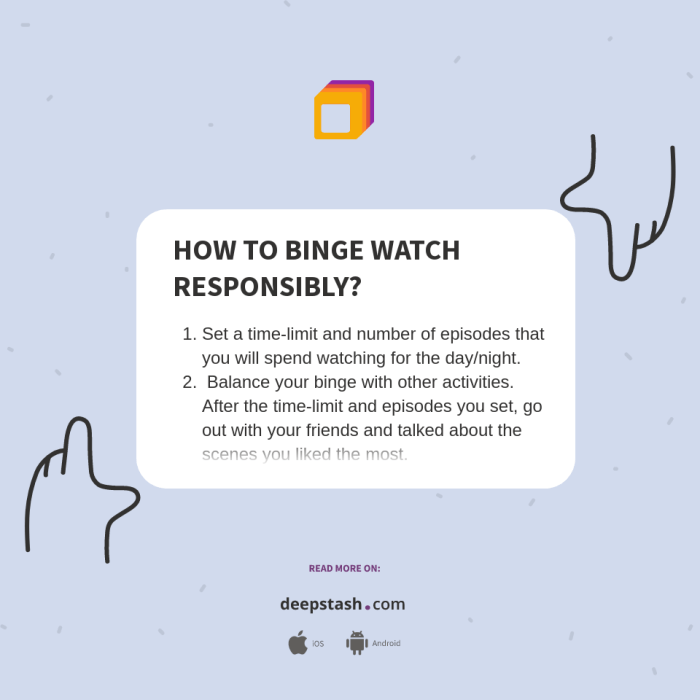
- Set a Time Limit: Decide beforehand how many episodes you will watch in a single session and stick to it. For example, limit yourself to 2-3 episodes per night.
- Schedule Viewing Time: Integrate binge-watching into your schedule, treating it like any other planned activity. Avoid letting it consume unplanned free time.
- Prioritize Other Activities: Ensure you maintain a balance between screen time and other essential activities such as exercise, social interactions, and work/study.
- Take Breaks: Incorporate regular breaks during your viewing sessions to rest your eyes and prevent eye strain. A short walk or some stretching can help.
- Stay Hydrated and Eat Regularly: Avoid neglecting your physical needs while binge-watching. Stay hydrated and eat nutritious meals and snacks.
- Maintain a Healthy Sleep Schedule: Don’t let binge-watching interfere with your sleep. Prioritize getting enough rest.
- Be Mindful of Your Mental Health: If you notice binge-watching is negatively impacting your mood or mental health, consider reducing your viewing time or seeking professional help.
Physical and Mental Well-being
Binge-watching, while offering entertainment, can significantly impact our physical and mental health if not approached responsibly. Excessive screen time, a hallmark of binge-watching sessions, can lead to a range of negative consequences affecting both our bodies and minds. Understanding these potential downsides is crucial for developing healthy viewing habits.
Negative Impacts on Physical Health
Prolonged periods spent passively watching screens contribute to several physical health problems. The disruption of sleep patterns is a common consequence. Spending hours watching shows before bed interferes with the body’s natural sleep-wake cycle, leading to sleep deprivation and impacting overall health. Poor posture, often associated with slouching on a couch for extended periods, can result in back pain, neck pain, and other musculoskeletal issues.
Finally, the strain on the eyes from focusing on a screen for hours can lead to eye fatigue, headaches, and even blurred vision. These physical ailments accumulate over time, potentially impacting long-term health significantly.
Negative Impacts on Mental Health
Beyond the physical, binge-watching can negatively impact mental well-being. The sedentary nature of the activity can contribute to feelings of stress and anxiety. The escapism offered by binge-watching, while temporarily relieving stress, can lead to avoidance of real-life responsibilities and exacerbate existing anxieties. Furthermore, spending extensive time watching screens often comes at the expense of social interaction, leading to social isolation and feelings of loneliness.
This detachment from real-world relationships can negatively impact mental health and overall well-being.
Mitigating Negative Effects
Implementing strategies to mitigate these negative effects is crucial for responsible binge-watching. Scheduling regular breaks during viewing sessions is vital. A 5-10 minute break every hour allows for stretching, eye exercises, and a brief change of environment, reducing eye strain and improving posture. Incorporating physical activity is equally important. Regular exercise counters the sedentary nature of binge-watching, promoting better sleep, improved mood, and reduced stress levels.
Setting a time limit for viewing sessions and sticking to it helps prevent excessive screen time. For example, limiting a viewing session to two hours with a 15-minute break halfway through, then engaging in some physical activity afterward, is a good starting point.
Comparison of Moderate vs. Excessive Binge-Watching
| Aspect | Moderate Viewing | Excessive Binge-Watching |
|---|---|---|
| Sleep Quality | Uninterrupted sleep, feeling refreshed | Disrupted sleep, fatigue, sleep deprivation |
| Physical Health | Good posture, minimal eye strain, normal energy levels | Poor posture, eye strain, headaches, musculoskeletal pain |
| Mental Health | Balanced mood, reduced stress, strong social connections | Increased stress, anxiety, social isolation, feelings of loneliness |
| Productivity | Maintains productivity, balances leisure and responsibilities | Reduced productivity, neglecting responsibilities |
Time Management and Prioritization
Integrating binge-watching into a balanced lifestyle requires mindful planning and self-discipline. It’s about finding a harmonious balance between leisure activities and responsibilities, ensuring neither aspect overshadows the other. The key is to treat binge-watching as a scheduled activity, rather than an all-consuming escape.Successful integration involves proactively scheduling binge-watching sessions, much like any other important appointment. This prevents spontaneous, uncontrolled viewing that can lead to neglecting other aspects of life.
This approach allows you to enjoy your chosen shows without sacrificing commitments or well-being.
Time Management Techniques for Balanced Viewing
Effective time management is crucial for preventing excessive binge-watching. This involves utilizing various strategies to allocate specific time slots for viewing without encroaching on essential tasks or responsibilities. By setting clear boundaries and sticking to them, you can maintain control over your viewing habits and prevent them from becoming detrimental.
- Time Blocking: Allocate specific time blocks in your daily or weekly schedule solely for binge-watching. For example, dedicate two hours on Saturday evenings to watching your favorite show.
- Pomodoro Technique: Work in focused bursts of binge-watching (e.g., 25 minutes) followed by short breaks (e.g., 5 minutes). This prevents prolonged, uninterrupted viewing sessions.
- Using a Timer: Set a timer for your designated binge-watching session. Once the timer goes off, stop watching, regardless of where you are in the episode or series. This helps prevent overspending time on the activity.
Prioritizing Tasks Over Binge-Watching
Prioritizing responsibilities over leisure activities is paramount for a balanced life. This requires a conscious decision to allocate sufficient time to essential tasks before indulging in entertainment. By consistently prioritizing responsibilities, you establish a healthy habit that prevents binge-watching from interfering with your productivity and well-being.
- Create a To-Do List: List all your daily and weekly tasks, prioritizing them based on urgency and importance. Tackle the most crucial tasks first before allocating time for binge-watching.
- Utilize a Planner: Use a physical or digital planner to schedule your day, week, or month. This visual representation of your schedule helps you manage your time effectively and prevents over-scheduling or neglecting responsibilities.
- Set Realistic Goals: Set achievable goals for your daily and weekly tasks. Avoid overcommitting yourself, which can lead to stress and neglecting your leisure time entirely.
Sample Weekly Schedule Incorporating Responsible Leisure Time
A well-structured weekly schedule can help integrate leisure time, including binge-watching, without compromising other aspects of life. This involves allocating specific time slots for both work/study and leisure activities, ensuring a balanced approach. This structured approach promotes a sense of control and prevents feelings of guilt or overwhelm associated with excessive screen time.
| Day | Morning | Afternoon | Evening |
|---|---|---|---|
| Monday | Work/Study | Work/Study | Dinner, Exercise, 1 hour of reading |
| Tuesday | Work/Study | Work/Study | Dinner, Social activity |
| Wednesday | Work/Study | Work/Study | Dinner, 1 hour of binge-watching |
| Thursday | Work/Study | Work/Study | Dinner, Relaxing activity |
| Friday | Work/Study | Work/Study | Dinner, Prepare for weekend |
| Saturday | Errands/Chores | Personal time | Dinner, 2 hours of binge-watching |
| Sunday | Relaxing activity | Family time | Dinner, Prepare for the week |
Social Interactions and Relationships
Binge-watching, while enjoyable, can significantly impact our social interactions and relationships if not managed carefully. The immersive nature of extended screen time can lead to neglecting real-life connections, potentially straining relationships with family, friends, and colleagues. Understanding this impact and implementing strategies to mitigate negative effects is crucial for maintaining a balanced and fulfilling life.The allure of captivating series or movies can easily overshadow our responsibilities and commitments to others.
Hours spent engrossed in digital entertainment can translate to missed opportunities for meaningful conversations, shared experiences, and the strengthening of bonds. This can lead to feelings of isolation, resentment, and ultimately, damage to personal relationships. Finding a healthy balance between screen time and real-life interactions is essential for overall well-being.
Maintaining Healthy Relationships While Enjoying Entertainment
Prioritizing social connections alongside entertainment involves conscious effort and planning. Scheduling specific times for interaction with loved ones, even if it’s just a short conversation or a shared meal, demonstrates commitment and strengthens relationships. Engaging in shared activities, such as watching a movie together followed by a discussion, can create a balance between individual entertainment and collective bonding.
Open communication about screen time habits with partners and family members can foster understanding and prevent misunderstandings.
Balancing Screen Time with Quality Time Spent with Loved Ones
Effective time management is key to balancing screen time and quality time with loved ones. Creating a weekly schedule that allocates specific time slots for both activities helps establish a routine and prevent one from dominating the other. Setting realistic goals for binge-watching, such as limiting episodes per session or designating specific days for viewing, can prevent excessive screen time.
Using timers or apps that track screen time can aid in self-monitoring and encourage conscious choices about how time is spent. Substituting some binge-watching sessions with alternative activities, like engaging in hobbies, exercising, or spending time outdoors, can create a healthier balance. For example, instead of spending an entire Saturday binge-watching, one could dedicate the morning to a hike and the afternoon to a couple of episodes.
Setting Boundaries Regarding Screen Time Within a Social Context
Establishing clear boundaries regarding screen time within social situations is vital. This means being present and engaged during social gatherings, avoiding excessive phone checking or interrupting conversations to watch a show. Communicating these boundaries to others, such as letting friends and family know that you’ll be less available during a specific binge-watching period, can manage expectations and prevent conflict.
Actively participating in conversations, offering undivided attention, and putting away devices during meals or important events demonstrates respect for others and strengthens relationships. For instance, one might announce, “I’m really looking forward to catching up with you all tonight, so I’ll put my phone away for the evening.” This sets a clear expectation and demonstrates a commitment to quality time.
Choosing Content Wisely
Binge-watching responsibly isn’t just about managing your time; it’s also about making conscious choices about what you consume. Selecting shows and movies thoughtfully can significantly impact your overall viewing experience and prevent potential negative consequences. This section focuses on strategies for choosing content that aligns with your preferences and promotes well-being.Selecting shows and movies requires careful consideration of your personal tastes and the time you have available.
A fast-paced thriller might be perfect for a short break, while a sprawling historical drama demands a more significant time commitment. Understanding your own viewing habits and preferences is key to avoiding frustration and maximizing enjoyment.
Matching Content to Available Time
Choosing shows based on episode length and overall season length is crucial for effective time management. For instance, a half-hour sitcom allows for more flexible viewing than a one-hour drama. Similarly, shorter seasons (6-8 episodes) are ideal for viewers with limited time, whereas longer seasons (10+ episodes) require a more substantial commitment. Consider the average viewing time per episode and the total number of episodes to ensure the series aligns with your schedule.
Planning your viewing around your daily or weekly routines will improve your experience and prevent feelings of being overwhelmed.
Identifying Potentially Problematic Content
Certain genres or themes can trigger negative emotional responses or lead to unhealthy obsessions. For example, shows with graphic violence, intense psychological themes, or addictive storylines may be detrimental to your mental well-being if consumed excessively. It’s important to be aware of your own sensitivities and choose content that promotes relaxation and positive feelings, rather than anxiety or stress.
If a show starts to cause negative emotions, it’s perfectly acceptable to stop watching, even if you’re invested in the plot.
Comparing Streaming Services and Content
Different streaming services offer vastly different content libraries. Netflix might be known for its original series, while Hulu might focus on network television shows. Disney+ offers family-friendly content, while HBO Max boasts a range of critically acclaimed dramas and comedies. Before committing to a subscription, explore the available content on each platform to ensure it aligns with your viewing preferences.
Comparing pricing and features is also essential to making an informed decision that fits your budget and needs. Consider free trials to explore different services before committing long-term.
Questions to Ask Before Starting a New Series
Before diving into a new show, consider these factors:
- What is the genre and overall tone of the series?
- How long are the episodes, and how many episodes are in a season?
- Does the series contain potentially triggering content (violence, intense themes, etc.)?
- What are the reviews like from trusted sources (e.g., Rotten Tomatoes, IMDb)?
- Does the premise genuinely interest me, or am I starting it based on hype?
- Do I have the time to commit to watching this series without feeling rushed or stressed?
Movies and Television
Choosing what to watch during a binge-watching session significantly impacts the overall experience. Genre selection, content appropriateness, and the diversity of viewing material all contribute to a responsible and enjoyable binge. Understanding these factors helps viewers maximize their enjoyment while minimizing potential negative effects.Different genres evoke different emotional and intellectual responses. Action movies, for example, might lead to heightened arousal and excitement, while dramas can evoke empathy and introspection.
Comedies provide lighthearted entertainment and stress relief, whereas horror films can induce fear and anxiety. Documentaries offer educational value and expand knowledge, while sci-fi and fantasy genres stimulate imagination and creativity. The impact varies depending on individual sensitivity and the specific content consumed. Prolonged exposure to violent or disturbing content, regardless of genre, can be detrimental to mental well-being.
Genre Selection and its Impact
The wide variety of genres available offers viewers a vast range of experiences. Action films, with their fast-paced plots and thrilling sequences, can be stimulating but excessive consumption may lead to restlessness or difficulty concentrating on other tasks. Romantic comedies offer lighthearted escapism, providing a welcome break from stress, but overly idealized portrayals of relationships might create unrealistic expectations.
Documentaries, on the other hand, offer educational opportunities, deepening understanding of various subjects, but prolonged viewing of serious or emotionally taxing documentaries can lead to information overload or emotional fatigue. Finding a balance between diverse genres ensures a more well-rounded and engaging viewing experience.
Identifying and Avoiding Harmful Content
Identifying potentially harmful content requires awareness of personal sensitivities and triggers. Viewers should consider their own emotional and mental state before engaging with content that might be disturbing or upsetting. Content involving graphic violence, explicit sexual content, or depictions of self-harm should be approached with caution. Websites and streaming services often provide content ratings and warnings to help viewers make informed decisions.
Utilizing these resources and parental controls where applicable can help to filter out unsuitable material. If a viewer finds themselves feeling distressed or negatively affected by the content, they should immediately stop watching and engage in self-care activities.
Finding Balanced and Diverse Content
To prevent viewer fatigue and maintain engagement, it’s crucial to diversify content selection. Mixing genres, watching shorter-length shows alongside longer series, and incorporating other activities between viewing sessions helps to avoid mental overload and maintain interest. For instance, alternating between a fast-paced action thriller and a thought-provoking documentary can provide a balanced viewing experience. Incorporating breaks for physical activity, social interaction, or other hobbies prevents a passive and potentially isolating binge-watching experience.
A diverse viewing schedule ensures sustained engagement and prevents the viewer from becoming overly reliant on a single genre or style.
Resources for Finding Reviews and Recommendations
Numerous resources exist to aid in content selection. Websites such as Rotten Tomatoes and IMDb aggregate professional and user reviews, providing a broad overview of critical reception and audience opinions. Streaming services themselves often offer curated lists and recommendations based on viewing history and preferences. Social media platforms and online forums can also offer user reviews and discussions, providing diverse perspectives.
Utilizing a combination of these resources allows viewers to make informed choices and discover new and engaging content tailored to their interests and preferences. Consulting multiple sources ensures a more comprehensive understanding of the content before committing to a binge-watching session.
Ultimately, responsible binge-watching is about finding a harmonious balance between indulging in your favorite shows and maintaining a fulfilling life. By incorporating the strategies Artikeld in this guide – from setting realistic screen time goals to prioritizing self-care and social connections – you can transform your viewing habits into a healthy and enriching part of your routine. Remember, moderation and mindful consumption are key to enjoying entertainment without sacrificing your well-being.
Question & Answer Hub
What if I experience withdrawal symptoms when trying to reduce my binge-watching?
Withdrawal symptoms are common. Gradually reduce screen time, find alternative relaxing activities (reading, exercise), and practice mindfulness to manage cravings.
How can I prevent binge-watching from negatively impacting my sleep?
Avoid watching screens close to bedtime. Establish a consistent sleep schedule, create a relaxing bedtime routine, and ensure your bedroom is dark and quiet.
Are there any apps that can help me manage my screen time?
Yes, many apps for smartphones and computers offer screen time tracking and management features. Explore options like Freedom, Forest, or the built-in screen time controls on your device.
How can I balance binge-watching with my work responsibilities?
Schedule specific times for watching, setting clear boundaries. Prioritize tasks, use time management techniques like the Pomodoro method, and reward yourself with viewing time after completing work goals.