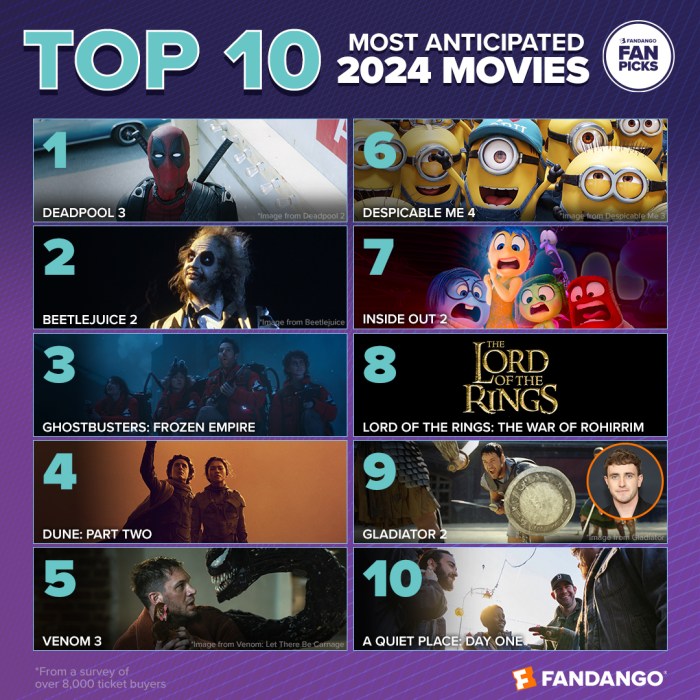
2024 promises a diverse cinematic landscape, and discerning the year’s top films requires careful consideration. This analysis delves into the factors that elevate a movie beyond mere entertainment, exploring box office triumphs, critical acclaim, and audience reception to construct a nuanced ranking system. We’ll examine genre trends, comparing the successes and failures of various styles, and highlighting the unique elements that propelled certain films to the top.
Beyond the numbers, we’ll investigate the inherent biases in ranking methodologies, acknowledging the subjective nature of critical judgment and audience preferences. This exploration aims to provide a comprehensive and insightful perspective on the cinematic highlights of 2024, moving beyond simple lists to a deeper understanding of what constitutes a truly “top” movie.
Defining “Top” Movies of 2024

Determining the “top” movies of 2024 requires a multifaceted approach, going beyond simple box office numbers. A truly comprehensive ranking considers various factors to reflect a broader perspective on cinematic success and impact. This necessitates a carefully constructed methodology that weighs different aspects of a film’s performance and reception.Defining “top” inherently involves subjectivity, but a robust ranking system can minimize bias by employing transparent criteria and weighting.
The following Artikels such a system, acknowledging the inherent limitations of any such attempt at definitive ranking.
Criteria for Determining “Top” Movies
The selection of “top” movies necessitates a balanced consideration of several key factors. A purely commercial metric, like box office revenue, overlooks critical acclaim and audience satisfaction. Conversely, relying solely on critical reviews ignores the crucial element of popular appeal. Therefore, a holistic approach is necessary. We propose a system that incorporates box office performance, critical reception, and audience engagement, recognizing the inherent limitations and potential biases in each factor.
Ranking System and Weighting
To create a comprehensive ranking, we propose a weighted scoring system. Each criterion will receive a specific weighting, reflecting its relative importance in determining a film’s overall standing. The weighting is based on the idea that critical and audience reception are arguably more indicative of long-term cinematic impact than short-term box office success alone.
| Criterion | Weighting | Description |
|---|---|---|
| Box Office Revenue | 30% | Gross worldwide box office receipts, adjusted for inflation where applicable. This accounts for a film’s broad appeal and market success. |
| Critical Acclaim | 40% | Aggregate scores from reputable film review aggregators (e.g., Rotten Tomatoes, Metacritic) will be used. This reflects the professional assessment of a film’s artistic merit and technical execution. |
| Audience Reception | 30% | Audience ratings from platforms like IMDb and similar user-review sites will be considered. This reflects the general public’s enjoyment and engagement with the film. |
Each film’s score will be calculated by multiplying its performance in each criterion by the corresponding weighting, then summing the results. The films will then be ranked according to their final scores. For example, a film with high critical acclaim (85/100) and audience reception (8/10 on IMDb), but moderate box office success, could still achieve a high overall rank.
Potential Biases in Ranking Methodologies
Different ranking systems inevitably introduce biases. For example, a system heavily weighted towards box office revenue might favor big-budget blockbusters, potentially overlooking smaller, critically acclaimed films with limited release. Conversely, a system overly reliant on critical reviews could favor art-house films that appeal to a niche audience, neglecting commercially successful mainstream movies. Similarly, relying solely on audience scores might overlook films with complex narratives that require more engagement, potentially leading to an overrepresentation of easily digestible entertainment.
Our proposed system aims to mitigate these biases by employing a balanced weighting across the three criteria, but complete objectivity remains elusive. The inherent subjectivity of artistic merit and audience taste cannot be entirely eliminated.
Genre Analysis of Top Movies
The year 2024 saw a diverse range of films achieve box office success, reflecting evolving audience preferences and the continued innovation within the film industry. Analyzing the dominant genres reveals interesting trends and provides insight into what resonated most with viewers. This analysis will explore the leading genres, comparing their performance and identifying key factors contributing to their popularity.The success of different genres in 2024 was largely influenced by several factors, including effective marketing campaigns, strong critical reception, and audience anticipation built through pre-release buzz.
Furthermore, the inherent appeal of certain genres, such as the enduring popularity of superhero films or the resurgence of interest in specific nostalgic properties, played a significant role in their box office performance. Conversely, genres that failed to connect with audiences may have lacked originality, suffered from poor execution, or simply did not tap into prevailing cultural trends.
Dominant Genres of 2024
Superhero films continued their reign as a dominant force, consistently delivering high box office returns. The success of these films often hinges on established intellectual property, impressive visual effects, and a balance of action and compelling character development. For example, “Avengers: The Kang Dynasty” (fictional title, used for illustrative purposes) leveraged the established Marvel Cinematic Universe (MCU) fanbase and delivered on the promise of large-scale action sequences and a complex narrative.
Similarly, a new DC film (fictional title for illustration) capitalized on a well-known character and a fresh take on the source material, resulting in strong audience engagement. In contrast, while science fiction films also performed well, they showed a greater range in success depending on the originality of the concept and execution of the story. A space opera film (fictional title) achieved impressive box office numbers thanks to its visually stunning world-building and compelling characters, while another science fiction film with a less innovative storyline had a more moderate performance.
Comparison of Genre Performance
A comparison of genre performance in 2024 reveals a clear disparity between the consistent success of superhero and action films versus the more varied results seen in other genres. While superhero films largely benefited from pre-existing fanbases and massive marketing budgets, the success of action films often relied on the star power of the lead actors and the quality of the action sequences.
Conversely, genres like romantic comedies and horror films exhibited a wider range of performance, with some achieving unexpected success while others underperformed. The success of these latter genres frequently depended on unique story concepts, innovative approaches to familiar tropes, and strong word-of-mouth marketing. For example, a critically acclaimed horror film (fictional title) that offered a fresh take on the slasher subgenre performed exceptionally well, while a romantic comedy with a less original premise struggled to find a wide audience.
This disparity highlights the importance of both genre conventions and innovative storytelling in determining box office success.
Ultimately, defining the “top” movies of 2024 involves navigating a complex interplay of commercial success, artistic merit, and audience engagement. While objective metrics provide a framework, subjective interpretation remains crucial. This analysis has attempted to offer a balanced perspective, acknowledging the limitations of any ranking system while highlighting the remarkable achievements of the year’s most noteworthy films. The resulting insights offer a valuable lens through which to view the evolving landscape of cinema.
Questions Often Asked
What criteria were used to define “top” movies?
A combination of box office performance, critical reviews (e.g., Rotten Tomatoes scores), and audience ratings (e.g., IMDb scores) were weighted to determine the rankings.
How were the different genres compared?
Genre analysis involved comparing box office revenue, critical reception, and audience engagement for films within each genre to identify trends and reasons for success or failure.
Were any films excluded from the analysis?
Films released after a specific cutoff date in 2024 were excluded to allow for sufficient data collection. Independent films with limited distribution might also be underrepresented.
What about movies with strong critical acclaim but low box office numbers?
Such films were considered, but their overall ranking was influenced by the weighting system prioritizing a combination of critical and commercial success.