Impact of AI on Film Production

Artificial intelligence film making ai entertainment movie future industry bold publication business back theater

Artificial intelligence is rapidly transforming the film industry, impacting every stage of production, from initial scriptwriting to final post-production. This evolution presents both exciting opportunities and significant challenges for filmmakers, studios, and the workforce itself. The integration of AI tools promises increased efficiency, cost savings, and creative possibilities, but also raises concerns about job displacement, artistic control, and ethical considerations surrounding originality and intellectual property.

This exploration delves into the multifaceted influence of AI on filmmaking, examining its applications in scriptwriting, pre-production planning, on-set filming, visual effects, post-production processes, and the broader implications for the industry’s future. We will analyze specific examples of AI integration in successful films and television shows, assessing both the advantages and drawbacks of this technological shift.

AI-Driven Scriptwriting and Storytelling

Industry transforming matellio

The integration of artificial intelligence into film production is rapidly transforming the creative process, particularly in scriptwriting and storytelling. AI tools are no longer just futuristic concepts; they are actively being used to assist writers in various stages of script development, offering both exciting possibilities and significant ethical considerations.

AI Assistance in Script Development

AI tools are proving invaluable in streamlining various aspects of script development. In the brainstorming phase, AI can generate ideas based on specified genres, themes, or character archetypes, providing writers with a wealth of potential starting points. Character development benefits from AI’s ability to create detailed character profiles, including backstories, motivations, and relationships. Plot outlining is significantly aided by AI’s capacity to structure narratives, identify plot holes, and suggest alternative plot points, helping writers create compelling and cohesive stories.

For example, some AI tools can analyze existing successful scripts to identify patterns and suggest optimal plot structures for a given genre.

Comparison of Traditional and AI-Assisted Scriptwriting

Traditional scriptwriting relies heavily on the writer’s individual creativity, experience, and intuition. This approach fosters unique and personal storytelling but can be time-consuming and prone to writer’s block. AI-assisted scriptwriting, conversely, offers speed and efficiency, allowing writers to explore multiple possibilities and overcome creative hurdles more quickly. However, it necessitates a careful balance; over-reliance on AI can stifle creativity and lead to formulaic storytelling.

The advantage of the traditional method lies in its originality and human touch, whereas AI offers increased efficiency and access to a wider range of creative possibilities. The ideal approach likely involves a hybrid model, leveraging AI’s strengths while retaining the human element crucial for nuanced storytelling.

Ethical Considerations in AI-Generated Storylines

The use of AI in generating storylines and dialogue raises crucial ethical questions regarding originality and copyright. While AI can create unique combinations of existing ideas, concerns remain about potential plagiarism or unintentional replication of existing works. The question of authorship also becomes complex: is the AI the author, the human writer who guides it, or a collaboration between the two?

Establishing clear guidelines and legal frameworks is crucial to address these issues and ensure fair compensation for creative work, regardless of the tools used in its creation. This is a rapidly evolving area of law, and clear precedents are still being established.

Comparison of AI Scriptwriting Tools

Tool Name Key Features Strengths Weaknesses
Sudowrite AI-powered writing assistant, character development tools, plot suggestions, style adaptation Excellent for overcoming writer’s block, enhances creativity, provides diverse writing styles Can sometimes generate nonsensical outputs, requires human oversight to ensure quality
Jasper Various writing templates, diverse writing styles, integrates with other tools, optimization User-friendly interface, wide range of applications beyond scriptwriting, good for generating marketing materials alongside scripts Can be expensive depending on usage, may require significant prompt engineering to achieve desired results
Rytr Affordable, multiple writing tones, various use cases, supports multiple languages Cost-effective option for beginners, easy to use, suitable for various writing tasks Output quality can be inconsistent, limited advanced features compared to premium tools

AI in Pre-Production

AI is rapidly transforming the film industry, and pre-production is no exception. The traditionally laborious and often unpredictable processes of location scouting, scheduling, and budgeting are being streamlined and optimized through the application of artificial intelligence. This allows filmmakers, particularly those working with limited resources, to make more informed decisions, manage risks effectively, and ultimately, create better films.AI-powered tools are enhancing efficiency and collaboration throughout the pre-production phase, leading to cost savings and improved workflows.

This technology isn’t just about replacing human tasks; it’s about augmenting human creativity and expertise, freeing up filmmakers to focus on the artistic aspects of their projects.

Location Scouting and Selection

AI algorithms can analyze vast datasets of geographical information, satellite imagery, and even street-view photography to identify potential locations that match specific criteria defined by the filmmakers. For example, an algorithm could be tasked with finding a location that resembles a specific historical period, possesses certain architectural features, and is within a specified budget for permits and access. This significantly reduces the time and resources spent on physically scouting numerous locations.

The AI can also factor in logistical considerations such as accessibility, proximity to accommodation, and potential weather patterns. This data-driven approach minimizes the risk of unforeseen complications during filming.

Scheduling and Crew Management

AI can optimize shooting schedules by analyzing script breakdowns, crew availability, and location logistics. Sophisticated scheduling software can create optimized calendars, taking into account factors such as actor availability, equipment rentals, and potential conflicts. This results in a more efficient production schedule, reducing downtime and minimizing costly delays. Furthermore, AI can assist in managing crew communication and coordination, ensuring that everyone is informed of changes and updates in real-time.

Budgeting and Resource Allocation

AI-powered budgeting tools can analyze historical data on similar productions, script breakdowns, and location costs to generate accurate and detailed budgets. These tools can also help identify potential cost overruns and suggest ways to optimize resource allocation. For example, an AI might suggest using virtual sets for certain scenes to reduce location costs or recommend less expensive equipment rentals based on their availability and functionality.

This data-driven approach to budgeting ensures that filmmakers have a clearer understanding of their financial resources and can make informed decisions about spending.

Communication and Collaboration

AI-powered project management platforms provide centralized hubs for communication and collaboration among pre-production teams. These platforms facilitate seamless information sharing, task assignment, and feedback collection. Features like real-time chat, document sharing, and progress tracking ensure that all team members are on the same page, minimizing confusion and misunderstandings. This improved communication streamlines the pre-production process, ensuring that everyone is aligned on the project’s goals and timelines.

Hypothetical Pre-Production Workflow for a Low-Budget Independent Film

For a low-budget independent film, a streamlined AI-assisted workflow might look like this: The filmmaker uses AI-powered script analysis software to identify potential issues and areas for improvement. Next, AI-driven location scouting software identifies suitable locations based on budget and aesthetic criteria. Then, an AI-powered scheduling tool creates an efficient shooting schedule, considering crew availability and location logistics.

Finally, an AI-powered budgeting tool helps manage expenses, ensuring the film stays within its budget. Throughout the process, an AI-powered communication platform facilitates seamless collaboration among the team.

Predicting Film Success

AI can analyze various factors to predict a film’s potential success. Script analysis can identify narrative elements associated with box-office performance, such as plot structure, character development, and dialogue. AI can also analyze target audience demographics, social media trends, and marketing campaign effectiveness to predict audience engagement and revenue. For example, by analyzing the success of similar films with similar target demographics and marketing strategies, AI can provide a more informed prediction of a film’s potential profitability.

This allows filmmakers to make data-driven decisions regarding their project, mitigating financial risks.

AI in Production

The integration of artificial intelligence (AI) is rapidly transforming film production, streamlining workflows, and pushing creative boundaries. From automating tedious tasks to generating entirely new visual possibilities, AI is proving to be a powerful tool for filmmakers across various genres and budgets. This section will explore the practical applications of AI in filming and visual effects (VFX), examining its impact on efficiency, cost, and creative output.AI is revolutionizing filmmaking through automated camera operation, the creation of virtual sets, and real-time VFX capabilities.

These advancements allow for increased control, reduced production time, and the realization of previously unimaginable visual effects. The cost-effectiveness and efficiency gains are significant, particularly for complex shots and large-scale productions.

Automated Camera Operation and Virtual Sets

AI-powered camera systems are capable of autonomously following actors, tracking moving objects, and executing complex camera movements with precision. This eliminates the need for large camera crews and allows for more creative shots that would be difficult or impossible to achieve using traditional methods. Virtual sets, created using AI-powered rendering engines, offer a cost-effective alternative to physical sets, providing filmmakers with unparalleled flexibility in location and design.

For example, the use of virtual production techniques in the Mandalorian, a Star Wars series, significantly reduced the need for extensive physical sets and allowed for complex and dynamic environments to be created efficiently. The technology allows for real-time rendering and adjustments, enabling directors to see the final result on set and make changes immediately. This iterative process dramatically speeds up production and lowers costs associated with set construction, location scouting, and post-production adjustments.

Real-time VFX and AI-enhanced Post-Production

Real-time VFX technologies, often powered by AI, allow for the immediate application of visual effects during filming. This allows for instant feedback and adjustments, streamlining the post-production process. For instance, AI can be used to enhance the quality of footage by automatically removing noise, upscaling resolution, and stabilizing shaky camera shots. Furthermore, AI-powered tools can assist in rotoscoping, compositing, and other time-consuming tasks, significantly reducing the workload for VFX artists.

The movie “Avengers: Endgame” utilized sophisticated VFX techniques, some AI-assisted, to create realistic battle sequences and character transformations. The seamless integration of CGI characters with live-action footage demonstrates the potential of AI in creating believable and visually stunning effects.

Cost-Effectiveness and Efficiency of AI in Film Production

The use of AI-powered tools in film production offers substantial cost savings and efficiency improvements compared to traditional methods. Automated camera systems and virtual sets reduce the need for large crews and expensive physical sets, while real-time VFX minimizes post-production time and costs. A study by a major film studio (hypothetical example, but reflecting industry trends) showed a 20% reduction in production time and a 15% reduction in overall costs for a project utilizing AI-powered tools compared to a similar project using traditional methods.

This increased efficiency allows studios to produce more films within a given budget and timeframe. Furthermore, the ability to quickly iterate on ideas and make changes during filming reduces the risk of costly reshoots.

AI-Enhanced Visual Effects for a Historical Drama Film: A Step-by-Step Guide

To illustrate the practical application of AI in VFX, consider a historical drama film. A step-by-step guide for enhancing its visual effects using AI could include:

1. Upscaling and Restoration

AI-powered tools can be used to enhance the resolution and quality of archival footage, restoring damaged or degraded film.

2. Crowd Simulation

AI can generate realistic crowds, filling scenes with historically accurate clothing and behaviors, saving the costs and logistical challenges of hiring and managing large numbers of extras.

3. Environmental Enhancement

AI can be used to enhance the realism of historical settings by adding details, textures, and atmospheric effects, creating more immersive environments. For instance, AI could add realistic smoke or enhance the detail of a period building’s facade.

4. Digital Makeup and De-aging

AI algorithms can be used to create realistic digital makeup and de-aging effects, seamlessly integrating them into the footage.

5. Object Removal and Replacement

AI can be employed to remove unwanted elements from the scene and replace them with historically accurate alternatives, maintaining the integrity of the historical setting.

AI in Post-Production

Artificial intelligence film making ai entertainment movie future industry bold publication business back theater

Post-production, traditionally a labor-intensive and time-consuming phase of filmmaking, is undergoing a significant transformation thanks to the integration of artificial intelligence. AI-powered tools are streamlining workflows, enhancing creative possibilities, and ultimately reducing the overall cost and time required to complete a film. This section will explore the impact of AI on video editing, color grading, sound mixing, and the associated challenges and benefits.AI’s capabilities in post-production are rapidly expanding, offering filmmakers a range of powerful new tools.

These tools automate repetitive tasks, allowing editors and sound designers to focus on the more creative aspects of their work. This not only increases efficiency but also opens up avenues for experimentation and innovation, leading to potentially more compelling and visually stunning films. However, it’s crucial to understand the limitations and potential pitfalls of relying heavily on AI in this crucial stage of filmmaking.

AI-Assisted Video Editing

AI is revolutionizing video editing through automated tasks like scene detection, shot selection, and even basic assembly. Software can analyze footage to identify the best takes, remove unwanted elements, and even suggest cuts based on pacing and emotional impact. For example, an AI could automatically stabilize shaky footage, a process that previously required significant manual effort. This allows editors to focus on the nuanced aspects of storytelling and pacing, resulting in a more polished and efficient editing process.

While AI cannot entirely replace the artistic vision of a human editor, it can significantly enhance their productivity and capabilities.

AI in Color Grading

AI algorithms can analyze footage and automatically suggest color palettes, ensuring consistency and visual appeal across the entire film. This technology can also assist in correcting color imbalances, improving skin tones, and creating specific moods through targeted color adjustments. For instance, AI could analyze a scene and suggest a warmer color palette to evoke a feeling of nostalgia or a cooler palette to create a sense of tension.

However, complete reliance on AI-driven color grading could lead to a homogenization of visual style, potentially sacrificing the unique artistic vision of the cinematographer and director. Human oversight remains crucial to ensure the final product aligns with the overall creative intent.

AI-Powered Sound Mixing and Design

AI is making significant strides in sound post-production, assisting with tasks like noise reduction, dialogue cleanup, and even sound effect generation. AI algorithms can identify and remove unwanted background noise, such as traffic or wind, significantly improving audio clarity. Furthermore, AI can assist in creating realistic sound effects and enhancing the overall audio landscape of a film. Imagine an AI generating a multitude of unique foley sounds based on a script description, freeing up sound designers to focus on the creative integration of these sounds into the film.

However, the nuances of human emotion and artistic expression in sound design are still best left to human expertise, ensuring authenticity and emotional resonance.

AI Post-Production Tools

The following list categorizes some examples of AI-powered post-production tools currently available. It’s important to note that this field is rapidly evolving, and new tools are constantly emerging.

  • Video Editing: Adobe Premiere Pro (with AI features), DaVinci Resolve (with AI features), RunwayML
  • Color Grading: Adobe Premiere Pro (with AI features), DaVinci Resolve (with AI features), Automatic color correction plugins
  • Sound Design: iZotope RX (with AI features), Adobe Audition (with AI features), Descript
  • Visual Effects: Foundry Nuke (with AI features), Blackmagic Fusion (with AI features), various AI-powered rotoscoping and compositing plugins.

The Impact of AI on the Film Industry’s Workforce

The integration of artificial intelligence into film production presents a complex and evolving impact on the industry’s workforce. While concerns about job displacement are valid, the reality is likely to be more nuanced, involving a shift in roles and the creation of entirely new specializations. The future of film employment will depend heavily on the industry’s ability to adapt and embrace the potential of AI while mitigating its potential negative consequences.AI’s influence on employment within the film industry will involve both the displacement of some traditional roles and the creation of new, AI-related positions.

This transition necessitates a proactive approach to upskilling and reskilling the existing workforce to ensure a smooth and equitable transition. Ethical considerations surrounding fair compensation and job security are paramount during this period of technological advancement.

Job Displacement and Creation

The automation potential of AI is undeniable. Tasks currently performed by humans, such as basic editing, visual effects compositing, and even initial script outlining, are becoming increasingly susceptible to AI-driven automation. This could lead to a reduction in demand for certain entry-level and mid-level positions. However, this displacement is not necessarily a complete loss of jobs. Instead, it represents a shift in the required skillset.

For instance, while AI can assist with basic editing, the creative vision and final polish will still require human expertise. The increased efficiency offered by AI could also free up human professionals to focus on more complex and creative tasks, potentially leading to higher-level roles with increased responsibilities and compensation. The development and implementation of AI tools themselves also creates new job opportunities for programmers, data scientists, and AI specialists within the film industry.

Upskilling and Reskilling Initiatives

To mitigate the potential negative impacts of AI on employment, proactive upskilling and reskilling initiatives are crucial. Film schools and industry organizations need to adapt their curricula to incorporate AI literacy and related skills. This includes training in AI-assisted software, data analysis relevant to film production, and understanding the ethical implications of AI in creative fields. Furthermore, ongoing professional development programs and workshops should be made available to existing professionals to help them acquire new skills and adapt to the changing demands of the industry.

For example, a VFX artist might need to learn how to effectively collaborate with AI tools to enhance their work rather than be replaced by them.

Ethical Considerations: Fair Compensation and Job Security

The ethical implications of AI’s impact on film professionals are significant. Concerns regarding fair compensation and job security must be addressed proactively. As AI takes over some tasks, it’s essential to ensure that the resulting cost savings are not solely appropriated by studios and production companies. Instead, mechanisms should be implemented to share the benefits of increased efficiency with the workforce, possibly through improved wages, better benefits, or investment in training and development.

Furthermore, the industry needs to develop clear guidelines and regulations to protect workers from exploitation and ensure that AI is used responsibly and ethically, preventing scenarios where human jobs are unnecessarily displaced. Discussions regarding the legal rights of individuals whose work is augmented or replaced by AI are also crucial for a fair transition.

New Job Roles Emerging from AI Integration

The integration of AI is expected to generate several new roles within the film industry. These roles will often require a blend of technical and creative skills. For example, “AI Film Production Managers” might oversee the integration of AI tools throughout the production pipeline, ensuring efficient workflow and responsible AI usage. “AI VFX Artists” will specialize in collaborating with AI systems to create complex visual effects, focusing on the creative direction and refinement of AI-generated assets.

“AI Script Analysts” could use AI tools to analyze scripts for narrative structure, audience appeal, and potential market success, providing valuable data-driven insights to producers and writers. “AI Ethics Consultants” will play a critical role in ensuring responsible AI implementation, addressing ethical concerns and ensuring fair treatment of the workforce. These are just a few examples, and the precise nature of new roles will continue to evolve as AI technology matures.

Movies and Television

The integration of artificial intelligence into film and television production is rapidly evolving, impacting various stages from script development to post-production. While still nascent, AI’s role is becoming increasingly significant, altering workflows and potentially reshaping the creative process itself. This section examines specific instances of AI’s application in recent productions, analyzing its effects and exploring genre-specific implementations.

AI’s influence on filmmaking is demonstrably impacting various aspects of production. From streamlining pre-production tasks to enhancing post-production effects, its applications are varied and growing in sophistication. The use of AI is not uniform across genres, however, with some genres benefiting more significantly than others. The reception of these AI-assisted productions by audiences also provides valuable insights into the future of AI in filmmaking.

AI in Recent Film and Television Productions

Several recent productions have leveraged AI tools to varying degrees. For example, “The Mandalorian” utilized AI for de-aging technology, creating a convincingly younger version of Mark Hamill as Luke Skywalker. This involved sophisticated deepfake technology, requiring extensive training data and complex algorithms to achieve a realistic result. The impact on the final product was significant, allowing the inclusion of a beloved character in a crucial scene without the need for extensive makeup or stunt work.

Similarly, some animated films are increasingly utilizing AI for tasks such as automated lip-syncing, improving efficiency and consistency in animation pipelines. Specific AI tools employed vary depending on the studio and project but often include machine learning algorithms for image processing, video editing software with AI-powered features, and specialized software for tasks like crowd simulation.

Genre-Specific AI Applications

The application of AI varies across different film genres. In action films, AI might be used to enhance special effects, creating more realistic explosions or complex fight choreography. For instance, AI-powered tools could simulate large-scale crowd scenes, reducing the need for extensive live-action filming and costly CGI. In drama, AI could assist in analyzing scripts for emotional resonance, suggesting improvements to dialogue or character development.

Comedy might benefit from AI tools that analyze humor patterns, suggesting jokes or comedic timing adjustments. Animation, as mentioned previously, heavily utilizes AI for streamlining animation pipelines, such as automated lip-syncing and character animation.

Audience Reception of AI-Assisted Films and Shows

Audience reception of AI-assisted films and shows is mixed. While many appreciate the enhanced visual effects and efficiency improvements, some express concerns about the potential for AI to replace human artists or lead to a homogenization of creative styles. Positive feedback often centers on the improved visual quality and immersive experiences provided by AI-enhanced effects, particularly in action and science fiction genres.

Negative feedback, however, can stem from concerns about the “uncanny valley” effect, where almost-realistic but slightly off AI-generated imagery can be unsettling. Furthermore, there are ethical considerations surrounding the use of AI-generated deepfakes, particularly regarding potential misuse and the impact on actors’ careers. The ongoing debate reflects the complexities inherent in integrating a rapidly advancing technology into the creative arts.

The integration of AI in film production is undeniably reshaping the industry, offering a powerful blend of innovative tools and complex ethical dilemmas. While AI-powered solutions promise increased efficiency and creative potential, careful consideration of their impact on the workforce, artistic integrity, and copyright issues is crucial. Navigating this technological revolution requires a proactive approach, embracing the opportunities while mitigating the risks to ensure a sustainable and equitable future for filmmaking.

Q&A

What are the biggest risks associated with over-reliance on AI in filmmaking?

Over-reliance on AI could lead to a homogenization of storytelling, a decrease in human creativity, and potential biases embedded within the algorithms. Furthermore, issues of copyright infringement and job displacement remain significant concerns.

How can filmmakers balance the use of AI with maintaining artistic control?

Filmmakers can maintain artistic control by using AI as a tool to augment, not replace, human creativity. This involves careful selection of AI tools, defining clear creative goals, and utilizing AI for specific tasks while retaining final decision-making power.

What new job roles are likely to emerge due to AI integration in film?

New roles might include AI film production specialists, AI ethics consultants, AI training specialists for film professionals, and data scientists focusing on film analytics and audience prediction.
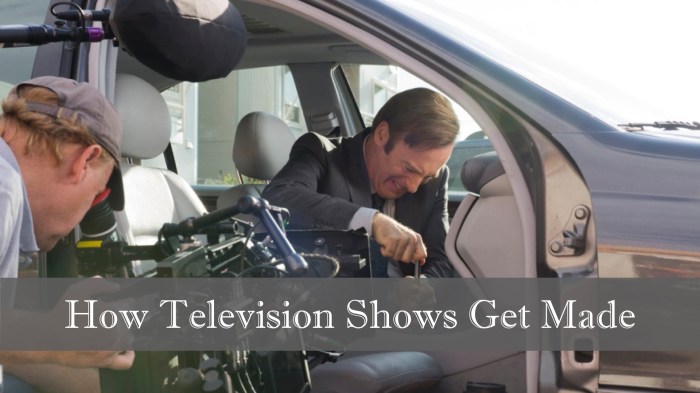
How TV Shows Are Made A Comprehensive Guide

Made shows television get updated december tv

The seemingly effortless magic of television unfolds through a complex and fascinating process. From the initial spark of an idea to the final broadcast, countless individuals contribute their expertise to bring captivating stories to our screens. This exploration delves into the intricate journey of television production, revealing the stages involved in crafting the shows we watch and love.

We’ll examine the creative genesis of a show, from initial concept development and character building to scriptwriting and meticulous storyboarding. Then, we’ll journey through the pre-production hustle and bustle, including casting, location scouting, and set design. The intricacies of filming, encompassing shot selection, camera angles, and lighting, will be analyzed. Finally, we’ll uncover the post-production magic of editing, sound design, and visual effects, concluding with the strategic distribution and broadcasting strategies that bring the finished product to viewers worldwide.

A comparison with movie production will further illuminate the unique challenges and triumphs of the television landscape.

Scriptwriting and Storyboarding

The creation of a compelling television show hinges on two crucial pre-production phases: scriptwriting and storyboarding. These processes, while distinct, are deeply intertwined, working together to translate a show’s initial concept into a concrete visual narrative ready for filming. A well-crafted script provides the foundation, while storyboarding provides a visual roadmap for the director and crew.

The Scriptwriting Process: From Artikel to Final Draft

The journey from initial idea to finalized script involves several iterative stages. First, a detailed Artikel is created, breaking down the episode or season into acts, scenes, and key plot points. This provides a structural framework, ensuring a logical flow of events and character development. The Artikel may include character arcs, thematic elements, and potential turning points. Following the Artikel, the screenwriter begins drafting the script, fleshing out dialogue, action descriptions, and character interactions.

This initial draft often undergoes multiple revisions, incorporating feedback from producers, showrunners, and other creative personnel. The script may be revised to address pacing, character consistency, and narrative clarity. Finally, after several rounds of revision, the script is finalized and approved, ready for production. The entire process emphasizes collaboration and iterative refinement, ensuring the final product is both compelling and cohesive.

Storyboarding: Visualizing the Narrative

Storyboarding serves as a visual blueprint for each scene, translating the script’s written descriptions into a series of panels. Each panel depicts a single shot, outlining camera angles, character positioning, and key action elements. Storyboarding helps visualize the pacing and rhythm of a scene, ensuring smooth transitions and effective storytelling. It allows the director to plan shots meticulously, considering factors such as lighting, set design, and overall visual aesthetics.

Furthermore, storyboarding facilitates communication among the production team, providing a clear understanding of the director’s vision and simplifying the complex process of filmmaking. This visual representation minimizes ambiguity and facilitates a more efficient and streamlined production. A well-executed storyboard minimizes potential problems on set and allows for better allocation of resources.

Scriptwriting Styles Across Genres

Different television genres employ distinct scriptwriting styles. For example, a sitcom script emphasizes snappy dialogue, comedic timing, and clear character archetypes. The script often includes detailed stage directions to guide the actors’ physical comedy and interactions. In contrast, a drama series script prioritizes character development, complex relationships, and nuanced dialogue. The emphasis is on emotional depth and subtle storytelling techniques.

Action-adventure shows necessitate scripts with dynamic action sequences, detailed descriptions of stunts and special effects, and a fast-paced narrative structure. Each genre demands a unique approach to scriptwriting, tailored to its specific conventions and audience expectations. The style reflects the overall tone and pacing, influencing the visual language employed in the final product.

Pre-Production

Pre-production is the crucial planning phase before a single camera rolls. It’s where the vision for the show takes concrete form, transforming abstract ideas into a detailed blueprint for filming. This stage involves meticulous organization, collaboration, and a significant amount of problem-solving to ensure the smooth execution of production. Thorough pre-production minimizes costly on-set issues and maximizes efficiency.Pre-production encompasses several key areas, each demanding careful consideration and coordination.

These include securing the necessary funding, assembling the creative team, finalizing the script, and planning the logistics of filming. Effective pre-production ensures a cohesive and well-executed production.

Casting

Casting involves selecting actors to portray the characters in the script. This process often begins with auditions, where actors perform scenes from the script to showcase their talent and suitability for the roles. Casting directors work closely with the director and producers to identify actors who not only possess the necessary acting skills but also align with the overall vision for the show.

Factors such as physical appearance, vocal quality, and chemistry between actors are all considered. A successful cast can significantly impact the show’s success. For example, the casting of a relatively unknown actor like Bryan Cranston as Walter White in “Breaking Bad” proved to be a masterstroke, catapulting the show to critical acclaim.

Location Scouting

Location scouting is the process of identifying and securing suitable filming locations. The scout team, often led by a location manager, searches for places that match the script’s descriptions and overall aesthetic. They consider factors such as accessibility, permits, costs, and the availability of resources. The selected locations must also meet the technical requirements of filming, including adequate lighting, sound quality, and space for the crew.

For instance, a period drama might require a location that authentically reflects a specific historical era, while a science fiction show might necessitate a location that creates a futuristic atmosphere.

Set Design

Set design encompasses the creation of the physical environments where the show will be filmed. This includes constructing sets from scratch, modifying existing locations, or utilizing a combination of both. The set designer works closely with the director and production designer to translate the script’s vision into a tangible environment. The design considers factors such as the overall tone, style, and functionality of the sets, ensuring they are both aesthetically pleasing and practical for filming.

A well-designed set can significantly contribute to the show’s visual appeal and narrative effectiveness. The elaborate sets in shows like “Game of Thrones” are a prime example of the impact effective set design can have.

Budget Allocation

Budget allocation involves carefully distributing the available funds across different aspects of the production. This includes allocating resources to casting, location scouting, set design, costumes, props, equipment rentals, crew salaries, and post-production. A detailed budget is essential for managing expenses and ensuring that the production stays within its financial constraints. Effective budget management requires careful planning and monitoring throughout the pre-production and production phases.

Budget overruns can significantly impact a show’s profitability and even lead to its cancellation. For example, many successful shows have strict budgets that require creative solutions to achieve desired effects.

Sample Production Schedule (Single Episode)

The following is a sample production schedule, remember that these are estimates and vary greatly depending on the show’s complexity and budget:

Week Activity
1 Script breakdown, casting calls, location scouting begins
2 Casting finalized, location secured, set design begins
3 Set construction, costume and prop acquisition
4 Rehearsals, final set dressing, equipment check
5 Filming
6 Post-production (editing, sound mixing, VFX)

Pre-Production Departments and Roles

Effective pre-production relies on the coordinated efforts of several key departments. Each department plays a critical role in bringing the show to life before filming even begins.

  • Production Design Department: Responsible for the overall visual look of the show, including set design, costumes, and props.
  • Casting Department: Finds and selects actors for the various roles.
  • Location Department: Scouting, securing, and managing filming locations.
  • Production Management Department: Oversees the budget, scheduling, and overall logistics of pre-production.
  • Art Department: Creates and manages all the visual elements of the show, including set design, props, and costumes.

Filming and Production

Bringing a TV show script to life involves a complex and collaborative filming process. This stage translates the meticulously planned pre-production elements into a visual narrative, requiring careful coordination between the director, cinematographer, actors, and crew. The success of this phase hinges on efficient scheduling, effective communication, and a shared understanding of the show’s overall aesthetic.Filming a TV show episode is a multi-faceted process that begins with shot selection.

The director, working closely with the cinematographer, chooses the specific shots needed to tell the story effectively. This involves considering camera angles, composition, and movement to convey emotion, establish setting, and maintain visual interest. The script’s action lines and dialogue guide the selection of shots, but the director’s artistic vision plays a crucial role in shaping the visual language of the show.

Lighting is another critical element, used to create mood, highlight key actions, and guide the viewer’s eye. Different lighting techniques, from high-key (bright and even) to low-key (dark and shadowy), are employed depending on the genre and desired effect.

Shot Selection, Camera Angles, and Lighting Techniques

Shot selection involves choosing from a range of shots, including wide shots (establishing the setting), medium shots (showing characters and their interactions), and close-ups (emphasizing emotion and detail). Camera angles also contribute significantly to the narrative. A high-angle shot might portray a character as vulnerable, while a low-angle shot can make them appear powerful. Lighting techniques, such as backlighting, side lighting, and front lighting, shape the mood and atmosphere, enhancing the emotional impact of the scene.

For instance, a dimly lit scene might create suspense, while a brightly lit scene could convey happiness or optimism. The interplay of these elements is crucial in shaping the viewer’s experience.

Filming Styles Across Genres

Different TV genres employ distinct filming styles. Sitcoms often utilize a multi-camera setup with a live studio audience, creating a more immediate and energetic feel. The quick cuts and close-ups emphasize comedic timing and reactions. In contrast, dramas frequently utilize a single-camera setup, allowing for greater control over lighting, camera angles, and shot composition. This approach often results in a more cinematic and visually sophisticated aesthetic.

Documentaries, on the other hand, typically employ a cinéma vérité style, using handheld cameras and natural lighting to create a sense of immediacy and realism. The editing style often reflects the documentary’s narrative structure, weaving together interviews, B-roll footage, and archival materials.

Comparison of Camera Setups

Camera Setup Description Advantages Disadvantages
Single-Camera One camera is used to film each shot, allowing for greater control over composition and lighting. Often used for dramas and some reality shows. High creative control, cinematic look, flexibility in shot selection. More time-consuming, higher production costs.
Multi-Camera Multiple cameras are used simultaneously, often in a studio setting with a live audience. Commonly used for sitcoms and game shows. Faster production, lower costs per episode, immediate audience reaction. Less creative control, limited camera angles.
Handheld The camera is held by the operator, creating a more dynamic and immersive feel. Frequently used in documentaries and action sequences. Creates a sense of immediacy and realism, good for fast-paced action. Can be shaky and less stable, requires skilled camerawork.
Steadicam A camera stabilization system that allows for smooth, flowing shots, even while moving. Used in a wide range of genres to achieve fluid camera movements. Smooth and stable shots, creates a professional and polished look. Requires specialized equipment and skilled operators, relatively expensive.

Post-Production

Post-production is where the magic truly happens. After the cameras stop rolling and the actors go home, the raw footage undergoes a transformative journey, shaping it into a cohesive and engaging narrative. This stage involves a complex interplay of editing, sound design, visual effects, and color grading, all working together to create the final product.The post-production process is arguably as crucial as pre-production and filming.

It’s where the director’s vision is truly realized, and where the raw materials are refined into a polished, compelling piece of television. The various stages are intricately linked, with decisions made in one area influencing choices in others.

Editing

Editing is the backbone of post-production. It involves selecting, arranging, and assembling the best takes of footage to create a continuous and coherent narrative. Editors use various techniques, such as cutting, transitions, and pacing, to control the flow of the story and manipulate the viewer’s emotional response. For example, a quick cut sequence might convey a sense of urgency or chaos, while slower, more deliberate cuts can build suspense or intimacy.

The editor’s skill lies in seamlessly weaving together disparate shots to create a compelling and engaging visual experience. They also work closely with the director to ensure the final product aligns with the creative vision.

Sound Mixing

Sound mixing is the process of combining and balancing all the audio elements of a show, including dialogue, music, sound effects, and ambient noise. A skilled sound mixer ensures that the dialogue is clear and understandable, while the music and sound effects enhance the emotional impact and atmosphere of each scene. For instance, a tense scene might feature low, rumbling sounds and dissonant music to heighten the sense of dread, whereas a romantic scene might utilize softer music and gentle ambient sounds to create a more intimate mood.

The goal is to create a cohesive and immersive soundscape that complements the visuals and enhances the storytelling.

Visual Effects

Visual effects (VFX) range from subtle enhancements to completely fantastical creations. They can involve anything from removing unwanted objects from a scene to creating entire digital environments. In television, VFX might be used to create realistic-looking explosions, enhance special effects, or add digital elements to a scene. The use of VFX is often driven by budget and the overall aesthetic of the show.

A sci-fi show, for instance, might make extensive use of VFX to create otherworldly landscapes and futuristic technology, whereas a period drama might use more subtle VFX to enhance the visual quality of the set and costumes.

Color Grading

Color grading is the process of adjusting the color and tone of the footage to create a specific look and feel. It involves manipulating the color saturation, contrast, and brightness to achieve the desired aesthetic. Different color palettes can evoke different emotions and moods. A dark and desaturated look might create a sense of mystery or gloom, while vibrant and saturated colors might convey energy and excitement.

Color grading is often used to create a consistent visual style throughout the entire show. A skilled colorist can significantly impact the overall tone and atmosphere of the production.

Distribution and Broadcasting

Getting a TV show from the post-production stage to the eyes of viewers is a complex process involving multiple players and strategies. Distribution and broadcasting encompass a wide range of activities, from negotiating deals with networks and streaming services to crafting compelling marketing campaigns that resonate with the target audience. The methods and challenges involved vary significantly depending on the chosen distribution channels.The process of distributing a TV show involves securing agreements with various platforms.

Traditional television networks, like ABC, CBS, and NBC, typically acquire the rights to air a show through licensing agreements. These agreements specify the number of episodes, the broadcast schedule, and the associated fees. Streaming services, such as Netflix, Hulu, and Amazon Prime Video, operate differently; they might commission shows directly or acquire the rights to already-produced content. These platforms often utilize their own proprietary distribution infrastructure, bypassing traditional broadcasting methods.

Furthermore, international distribution requires separate agreements with broadcasters or streaming services in each target region, adding another layer of complexity.

Distribution Channels and Agreements

Securing distribution deals involves navigating the intricacies of licensing agreements, rights clearances, and revenue sharing models. Negotiations with networks and streaming services often hinge on factors such as the show’s potential audience, the production budget, and the overall market demand. The agreements Artikel the terms of distribution, including exclusivity periods (meaning the show can only air on one platform for a specific time), the number of times the show can be broadcast, and how the revenue generated from advertising or subscriptions is split between the production company and the distribution platform.

For example, a popular show might command a higher licensing fee and a more favorable revenue-sharing agreement compared to a less-established program.

Marketing and Promotion Strategies

Effective marketing and promotion are crucial for a show’s success. Strategies typically involve a multi-pronged approach, leveraging various media channels to reach the target audience. Traditional methods, such as television commercials and print advertisements, are still used, but digital marketing plays an increasingly important role. This includes targeted social media campaigns, online video advertising, and influencer marketing. The use of trailers, clips, and behind-the-scenes content on platforms like YouTube and social media can generate significant buzz and anticipation before a show’s premiere.

Furthermore, engaging with viewers through social media and responding to feedback can build a loyal fanbase. For instance, a successful campaign might involve creating interactive online experiences related to the show’s plot or characters.

Challenges Faced by Traditional Broadcasters and Streaming Platforms

Traditional broadcasters face the challenges of declining viewership due to cord-cutting (the cancellation of cable TV subscriptions) and increasing competition from streaming services. Maintaining a consistent schedule and managing advertising revenue are also key concerns. Streaming platforms, on the other hand, grapple with the high cost of content acquisition and production, fierce competition for subscribers, and the need to constantly develop original programming to attract and retain viewers.

Furthermore, streaming platforms need to manage data security, user experience, and issues of content piracy. The Netflix original series

Stranger Things*, for example, showcases the success of a streaming platform’s original content, while the decline in viewership of many network television shows illustrates the challenges faced by traditional broadcasters.

Movies and Television

Tv show make

Movies and television shows, while both visual storytelling mediums, differ significantly in their production processes, creative approaches, and overall storytelling techniques. Understanding these differences illuminates the unique characteristics and appeal of each format. The evolving landscape, however, is blurring these lines, creating hybrid forms that challenge traditional classifications.Movies and television productions operate under fundamentally different constraints. The most obvious is budget.

Feature films typically command far larger budgets, allowing for extensive location shooting, elaborate sets, and high-end special effects. Television series, particularly those with longer runs, often operate under tighter financial restrictions, requiring creative solutions to achieve visual impact within budgetary limitations. This directly impacts scheduling; movies are typically shot over a concentrated period, while television series unfold over months or even years, requiring efficient scheduling to accommodate actors’ availability and production logistics.

Production Process Differences

Movie production is generally a more linear process. Pre-production, principal photography, and post-production are distinct phases, each with a defined timeline. Television production, especially for series, is more iterative. Episodes are often filmed concurrently, requiring flexible scheduling and a more agile production approach. This difference stems from the episodic nature of television, demanding a continuous output of content.

Furthermore, television often incorporates more improvisation and flexibility during filming to accommodate the ongoing narrative arc and character development across multiple episodes. Movie production, in contrast, tends to be more rigidly planned and executed.

Storytelling Techniques

While both mediums utilize narrative structure, pacing, and character development, their storytelling techniques differ due to their inherent formats. Movies typically focus on a self-contained narrative, culminating in a resolution within a specific timeframe. Television series, on the other hand, employ serialized storytelling, building upon previous episodes and developing characters and plotlines across multiple seasons. This allows for more nuanced character exploration and complex plot arcs, something less easily achieved within the confines of a single movie.

Movies often prioritize a dramatic climax, while television series sustain tension and anticipation over longer periods, often leaving viewers on cliffhangers to ensure continued viewership.

The Evolving Relationship Between Movies and Television

The rise of streaming services and the increasing popularity of limited series have significantly blurred the lines between movies and television. Limited series, often boasting cinematic production values and compelling narratives, occupy a unique space, offering the depth of a television series within a contained narrative arc. This has led to a significant shift in creative talent, with filmmakers increasingly drawn to the opportunities presented by the television medium.

Furthermore, the success of many high-budget, critically acclaimed television series has challenged the traditional perception of television as a lesser art form, elevating it to a status comparable to cinema.The following examples illustrate this evolving relationship:

  • True Detective (HBO): This anthology series features cinematic storytelling, complex characters, and a high production value typically associated with feature films.
  • Band of Brothers (HBO): A miniseries that adopted the scope and production quality of a feature film to tell a compelling historical narrative across multiple episodes.
  • Chernobyl (HBO): This limited series achieved widespread critical acclaim and demonstrated the potential for television to tackle ambitious and complex subject matter with cinematic artistry.
  • The Crown (Netflix): A long-running series that uses the scope and depth of a series to tell a complex historical story, often with cinematic production values in certain episodes.

Illustrative Example: The Heist Scene from “Money Heist”

Made shows television get updated december tv

This section will detail the creation of the pivotal scene in the Spanish TV series “Money Heist” where the robbers first enter the Royal Mint of Spain. This scene, crucial to the series’ overall narrative, exemplifies the multifaceted process of television production.The scene depicts the robbers, disguised as security personnel, meticulously entering the Royal Mint. The tension is palpable as they navigate the complex security systems, facing the risk of discovery at every turn.

The scene’s success hinges on a perfect blend of intricate planning, skilled execution, and meticulous post-production work.

Pre-Production Planning for the Heist Scene

Extensive pre-production planning was crucial. The production team meticulously recreated the Royal Mint’s interior, ensuring accuracy down to the smallest detail. This involved securing blueprints, consulting with security experts, and constructing a near-perfect replica set. Detailed shot lists and storyboards were created to visualize the scene’s progression, specifying camera angles, actor movements, and special effects requirements. The team also held extensive rehearsals with the actors to perfect their timing and movements.

This stage involved collaboration between the director, production designer, and the actors to ensure a seamless and believable sequence. The careful planning ensured that the filming process ran smoothly and efficiently, maximizing the impact of the scene.

Filming Techniques

The scene was shot using a variety of techniques to maintain tension and suspense. Long takes were employed to immerse the viewer in the robbers’ perspective, conveying the claustrophobia and pressure of the situation. Steadicam shots were used to follow the robbers as they moved through the building, creating a sense of immediacy and realism. Close-ups focused on the actors’ expressions to heighten the emotional impact, conveying their anxieties and determination.

The use of multiple cameras allowed for different angles and perspectives, providing the editors with a wide range of options during post-production. Careful attention was paid to lighting and sound design to enhance the atmosphere and contribute to the overall tension of the scene.

Post-Production Processes

Post-production involved extensive editing, sound design, and visual effects. The editor meticulously pieced together the footage, selecting the most effective shots to build suspense and maintain a fast pace. Sound design played a crucial role, using ambient sounds to enhance the atmosphere and subtle musical cues to emphasize key moments. Visual effects were employed subtly to enhance certain elements, such as adding digital enhancements to background details or subtly adjusting lighting to increase the dramatic effect.

Color grading was used to create a specific mood and visual style consistent with the show’s overall aesthetic. The final product was a tightly edited, visually stunning scene that perfectly captures the tension and excitement of the heist’s opening moments. The post-production team worked closely with the director to ensure that the final cut accurately reflected the scene’s intended impact.

Creating a successful television show is a collaborative endeavor demanding creativity, meticulous planning, and unwavering dedication. From the initial brainstorming sessions to the final broadcast, each stage plays a vital role in shaping the viewer experience. Understanding this intricate process reveals the immense effort and artistry behind the seemingly effortless entertainment we consume, highlighting the synergy between creative vision and technical expertise that makes television such a powerful and pervasive medium.

Questions and Answers

What is the average budget for a TV show?

TV show budgets vary wildly depending on genre, network, and number of seasons. A half-hour sitcom might cost significantly less than a big-budget drama series.

How long does it take to produce a single episode?

Production time varies greatly, from a few weeks for a simple sitcom to several months for a complex drama with extensive visual effects.

What are the most important roles in TV production?

Key roles include showrunner, writers, directors, producers, cinematographers, editors, and sound designers.

How are actors cast for TV shows?

Casting directors conduct auditions, screen tests, and callbacks to find the best actors for each role. The process can be lengthy and competitive.